Previous Continue shopping
Your Order

You have no items in your cart

You might also like:
À propos ...de filets anti-insectes

About...insect nets

In organic farming and gardening, due to the increasing number of pests interfering with crops, the use of insect netting has become essential. They act as physical barriers and, when properly installed, protect vegetables with 100% effectiveness. I prefer them to organic insecticides, which, in many cases, do not provide the desired results and are a nuisance to predatory species and pollinators.
NET

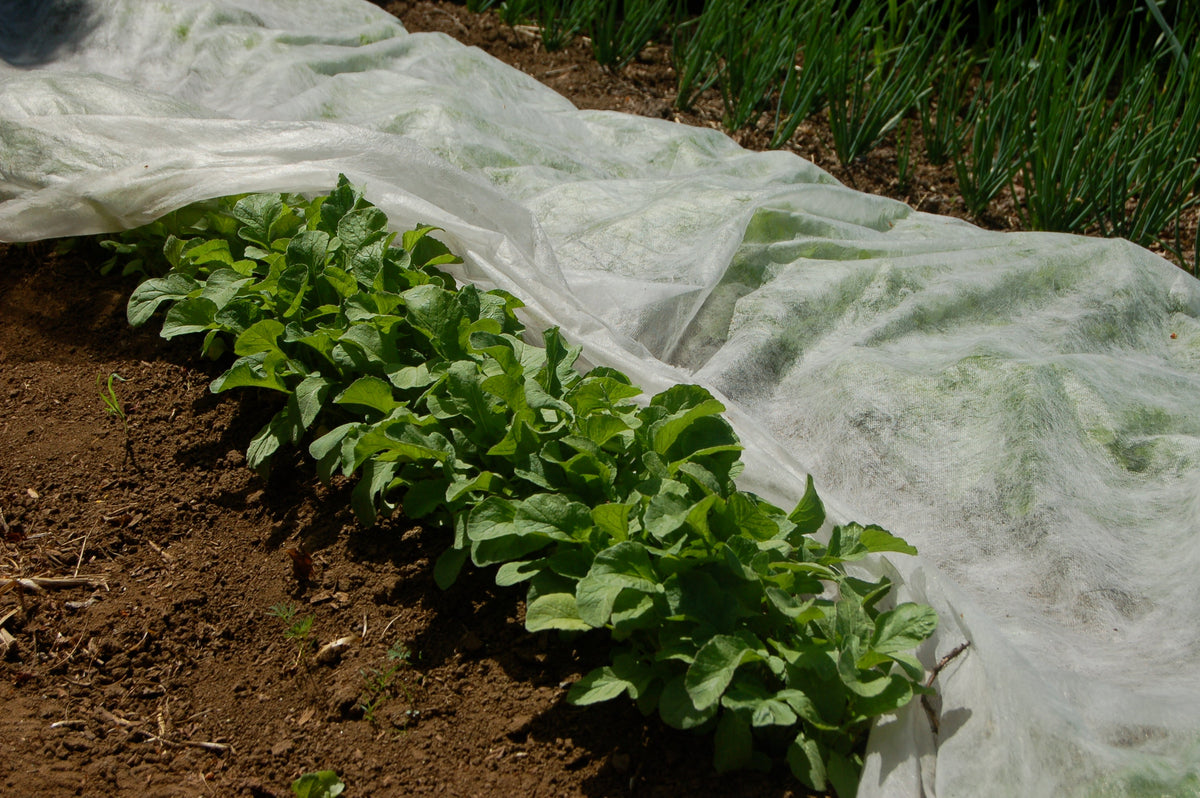
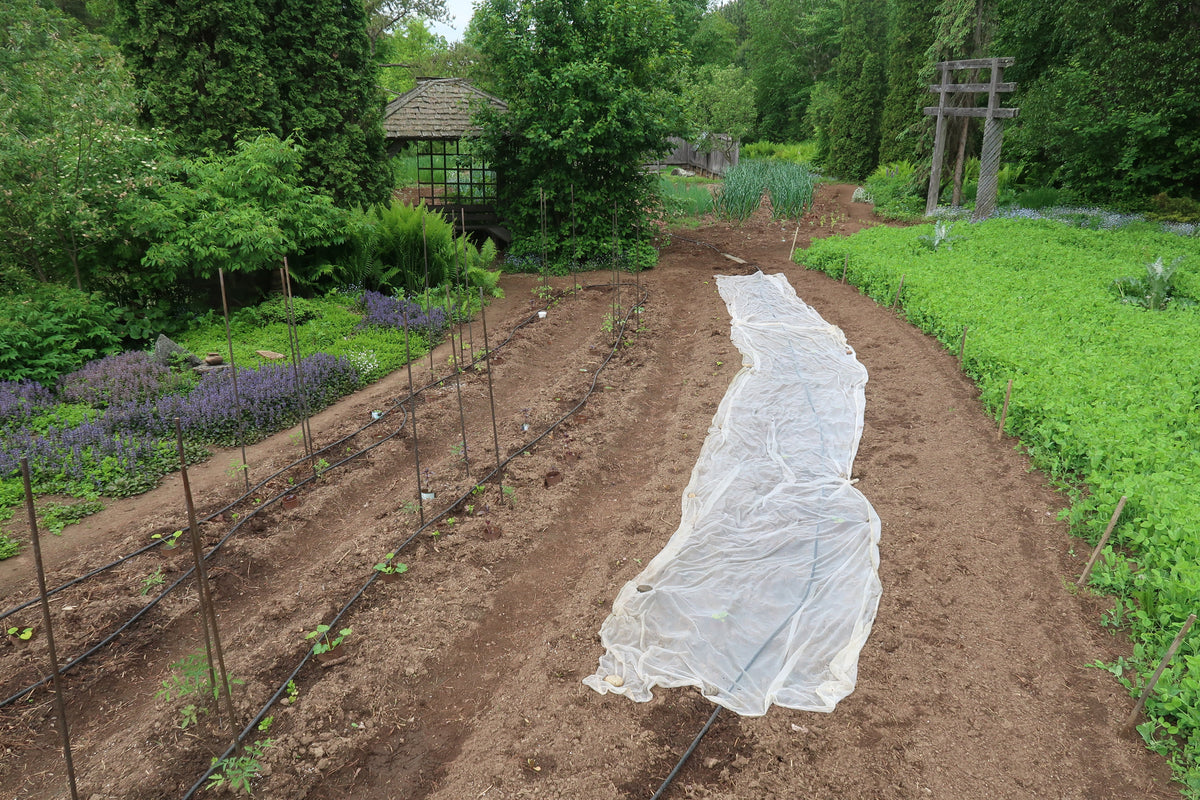
In early spring, I use netting to protect my radishes and turnips from cabbage maggot larvae, a fly that lays its eggs in May. Its larvae penetrate the roots of these two vegetables, which do not succumb, but produce wormy vegetables, which no one wants. So, as soon as the radishes and turnips emerge, I cover the bed(s) where I have planted these crops to protect them from the fly laying eggs. It is not necessary to use hoops for these two vegetables. The netting can be placed directly over the vegetables, but without making the fabric too tight to allow the foliage to spread. I secure the netting with round stones placed on the edge of the fabric every meter.

Cabbage maggot larva

Striped cucumber beetle

In June, as soon as the cucurbits emerge or are transplanted, it will be necessary to lay nets according to the same principle, that is to say without hoops, and keep them in place until July so as to prevent the damage caused by the striped cucumber beetle , which in addition to feeding on the foliage, transmits two serious diseases: Bacterial wilt and cucumber mosaic virus . When the netting is removed in July, if there are still any leaf beetles in the garden, they can be controlled manually in the flowers early in the morning by crushing them. I first remove the fillets from the zucchinis and pumpkins , which are less susceptible to the diseases mentioned than cucumbers. Manual control is done well on their flowers. Once the leaf beetles are under control, I remove the protective netting on the cucumbers so that pollination can take place.

NETS

I don't use netting for garlic, because I manage to control leek moth larvae very well by crushing them in June before they penetrate the heart of the stems. For leeks, however, the use of netting supported by hoops is necessary, because the larvae quickly find refuge in the overlapping leaves that structure this lily.

The Brassica family is preyed upon by many pests. BTK is effective against the imported cabbageworm, but not against the swede midge, another dipteran, which is present throughout the season. Where this pest is present, netting with hoops is necessary throughout the season to protect rutabagas, kohlrabi, broccoli, and cauliflower. However, with headed cabbages, the netting can be removed once the head has formed, as they are no longer vulnerable. Kale fares quite well against this pest; therefore, it does not require netting.

Finally, carrots can be infested by carrot fly larvae, which is detrimental to their preservation. A net installed in August prevents this other fly from laying eggs. Hoops are, however, necessary. You can also try treatment with a decoction of tansy leaves or lees, a 24-hour maceration of wood ash at a rate of 1 kg per 15 liters of water. Repellents such as coffee grounds, wormwood leaves, mugwort, tansy, or thuja can be used, but results are not guaranteed.

Despite the high cost of these protective fabrics, when cared for and stored in a suitable location, they can be stored for several years. Insect netting is available in various widths and lengths. When used with hoops or for cucurbits, it should be at least two meters wide.

To learn more about growing vegetables, I recommend The Ecological Cultivation of Vegetable Plants.

Yves Gagnon, author and seed producer.

Leave a comment

Please note: comments must be approved before they are published.