


About Bolivian Pink Amaranth
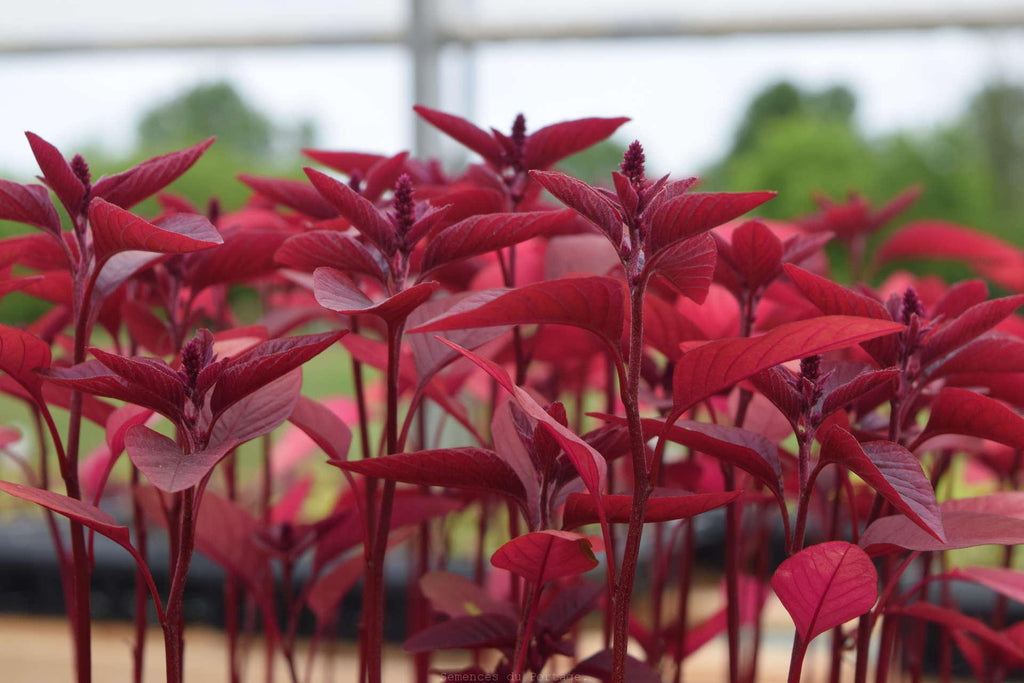
This magnificent amaranth produces upright plants that develop generous pink panicles.
Growing tips for Bolivian Rose Amaranth
Gardening articles related to Bolivian Rose Amaranth
Amaranth leaf to discover and taste.
Leaf amaranth plants are harvested when they touch. You can also pick the leaves one by one, depending on your needs. The best leaves come from young plants. The leaves should be eaten as soon as possible after harvesting, as they do not keep well. Amaranth leaves can be frozen as a soup base.
Yves Gagnon
Growing conditions for amaranth
Amaranth is a light and heat-loving species that grows in all types of soil as long as it is loose and well-drained. Amend the soil at a rate of 500 kg to 1 t of mature compost per 100 m2 depending on the fertility of the soil. Maintain the pH between 6 and 7.
Amaranth crop rotation
Leaf amaranth is grown in the second year of rotation, with plants requiring mature compost.
Companion planting of amaranth
Amaranth can be combined with all leafy vegetables that, like it, require mature compost. Make sure to give it maximum light.
— These valuable tips were written by Yves Gagnon, in the book The ecological cultivation of vegetable plants , Colloidal Editions.
