


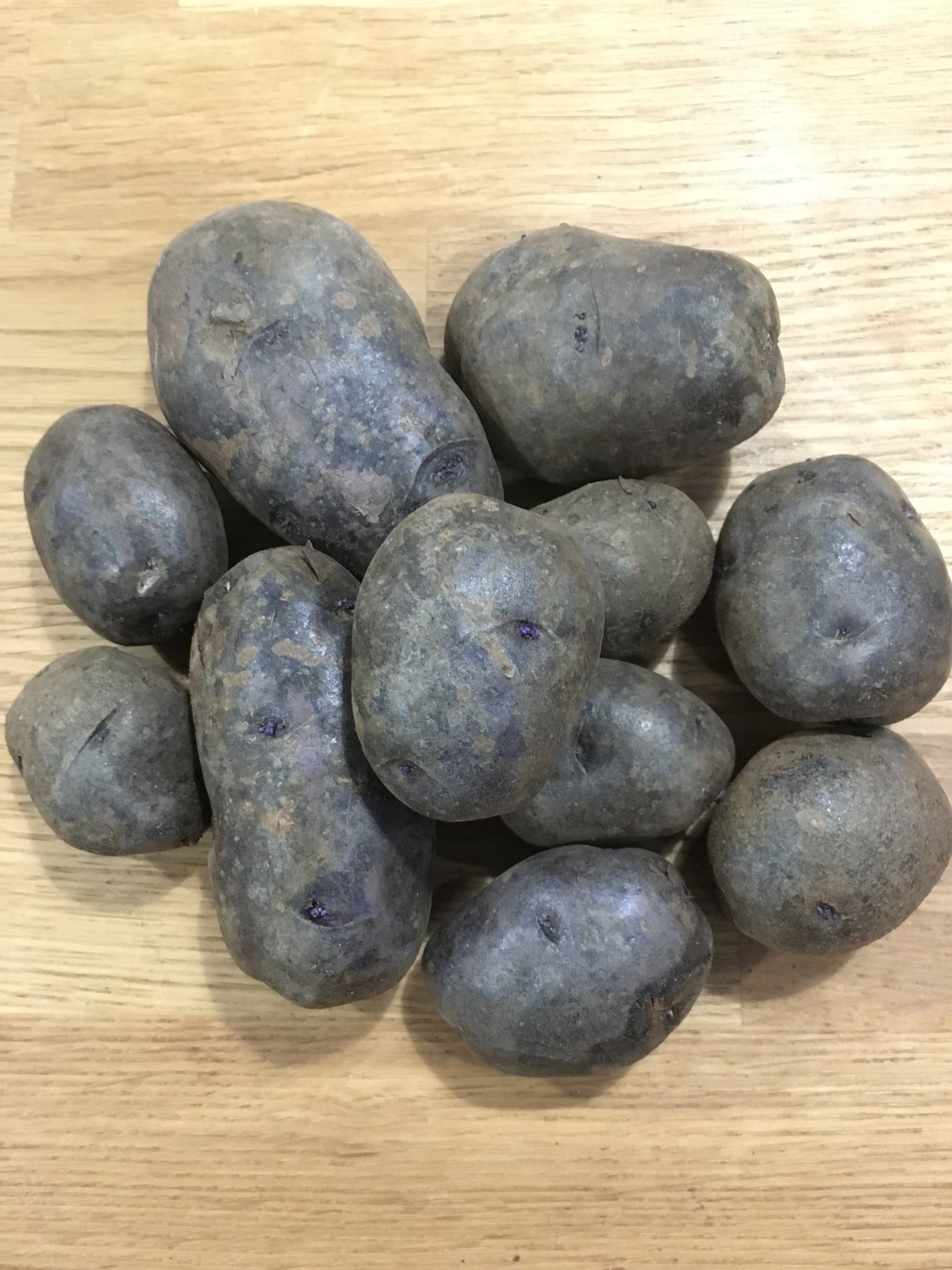
Blue Potato
We have run out of stock for this item.
These products are in stock


Description
Back next season!
Beautiful blue potato. Excellent roasted or mashed. Grown in Saint-Didace. Plant in May.
Depth: 15 to 20 cm
Distance between potatoes when planting: 30 cm
Distance between rows: 75 cm
Note that a 10 to 12 cm potato can be cut in half.
Potatoes must not freeze in the mail. We will therefore mail this item at the end of April.
Yves Gagnon
Potato growing conditions
The potato requires a sunny location. It has little tolerance for frost, but the climate of its native country means that it tolerates cool temperatures. The potato appreciates light, deep, humus-rich, and slightly acidic soils; heavy, damp soils are not suitable for it. As it is moderately demanding, the soil can be amended for its cultivation with 500 kg to 1 t of mature compost per 100 m2. Young compost and nitrogen fertilizers should be avoided, as they encourage parasitism, undermine its flavor, and impair its preservation. The presence of potassium is important for the size of the tubers. The use of sul-po-mag or basalt at a rate of 5 kg/100 m2 can correct a deficiency in this element. Since potatoes prefer acidity, under no circumstances should ash or lime be applied during the growing year or the previous year, since calcareous amendments, by alkalizing the soil, encourage the development of diseases such as common scab. Potatoes should be irrigated during periods of drought, especially from flowering onwards; this stage coincides with tuberization, the period when the plant forms its tubers. For sprinkler irrigation, temperate water should be used. The optimal pH for growing potatoes is between 5.2 and 6, but the plant tolerates a pH of up to 6.5.
Potato crop rotation
The potato can occupy different positions in the rotation. Thanks to its structuring properties, it is an excellent pioneer plant that can be used to prepare new land. As it effectively loosens the soil, it is a good precedent for carrot, parsnip, or salsify crops. It is often grown in the third or fourth year of the rotation in association with Fabaceae or other root vegetables. In fertile soil, it requires less compost, especially if significant inputs have been made in previous years. Potatoes can also be combined with leafy vegetables in the second year of the rotation. As the potato is susceptible to many diseases, it should be spaced out by 4 years from any other solanaceous crop.
Companion planting of potatoes
Beans are excellent companions for potatoes, as they have a repellent effect on the Colorado potato beetle. If you want to interplant rows of beans between the rows of potatoes, space the potato rows 1 m apart so that they can be replanted. To make replanting easier, you can also interplant a row of legumes every two rows of potatoes. Potatoes also grow well alongside peas, brassicas, and other root vegetables. Avoid planting them with squash and tomatoes.
— These valuable tips were written by Yves Gagnon, in the book The ecological cultivation of vegetable plants , Colloidal Editions.
A potato to discover
Blue potatoes were introduced to North America in the early 1970s and have been gaining popularity ever since. Some find them to have a slightly nutty flavor. Whatever flavor you attribute to them, this category of potato lends itself wonderfully to baking and making French fries. Their skin ranges from purple to blue, and their flesh ranges from white to white with purple veins.
to a uniform blue, depending on the cultivar.
