


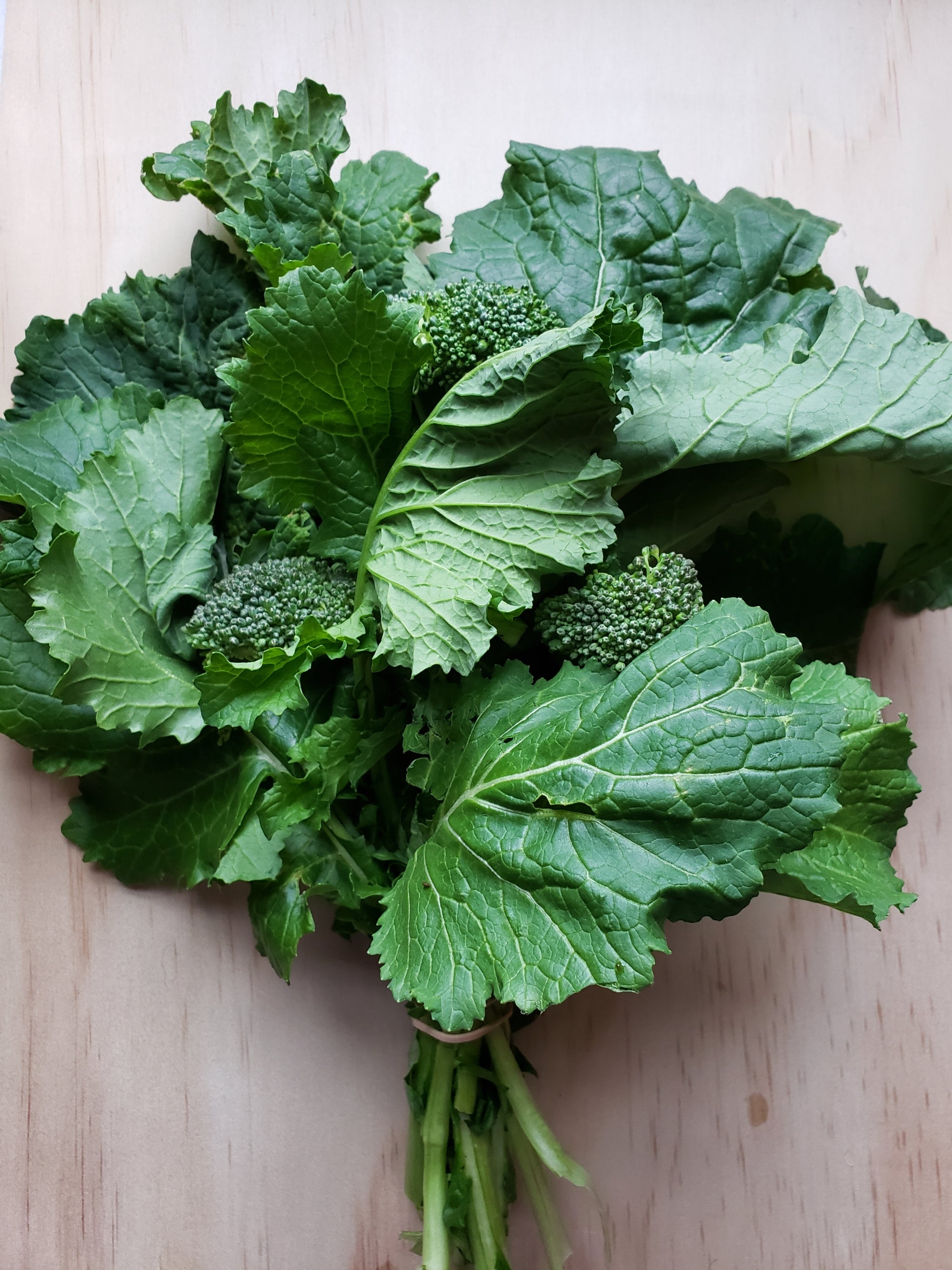
Broccoli rabe
We have run out of stock for this item.
Ces semences sont disponibles


About Spring Raab rapini
Typical of Italian cuisine. Sautéed or steamed, the stems, leaves, and flower buds are eaten. Slightly bitter.
Growing tips for Spring raab
Gardening articles related to Spring raab
Our broccoli rabe seeds are certified organic.
We use natural, eco-friendly methods to grow our plants, without pesticides, herbicides, or chemical fertilizers. By choosing our organic broccoli rabe seeds, you support a responsible, nature-friendly approach.
Learn more:
Broccoli Raab
This distinctive species produces small, leaf-wrapped inflorescences with a bitterness that varies depending on environmental conditions. It is recommended to lightly blanch them before sautéing them in a pan. Sautéed rapini is very popular in Italy. Because the vegetable develops more bitterness in hot, dry conditions, it is grown for a spring or fall harvest.
Yves Gagnon
Growing conditions for broccoli
Like headed cabbage, broccoli thrives in cool conditions and a decreasing photoperiod. The plants are frost-resistant. However, exposure to temperatures below 0°C during their vegetative development encourages the production of small inflorescences; spring broccoli crops must therefore be grown under protection, either under a floating row cover or a mini-tunnel. High heat and lack of water tend to cause the buds to open prematurely. For spring, choose early cultivars so that the plants are exposed as little as possible to the summer heat during flower induction. The best results are obtained with autumn crops. In this case, opt for late cultivars.
Broccoli Crop Rotation
Broccoli is grown in the second year of rotation after growing plants that require young compost.
Broccoli Companionship
Broccoli is associated with other leafy vegetables that are grown like it in the second year of rotation with additions of well-rotted compost. Thus, broccoli grows well alongside various lettuces and chicories, celery, Swiss chard, spinach and leeks. It could also be associated with celeriac, radish and beetroot. Most aromatic plants such as thyme, sage and savory are beneficial to it, as they make them more difficult for pests to spot. Marigold, nasturtium and French marigold are
good neighbors. To save space, early broccoli grown under agrotextile or mini-tunnel should be combined with radishes and turnips, two species that also require protection against the fruit fly.
cabbage.
— These valuable tips were written by Yves Gagnon, in the book The ecological cultivation of vegetable plants , Colloidal Editions.
