


About Osaka Purple mustard
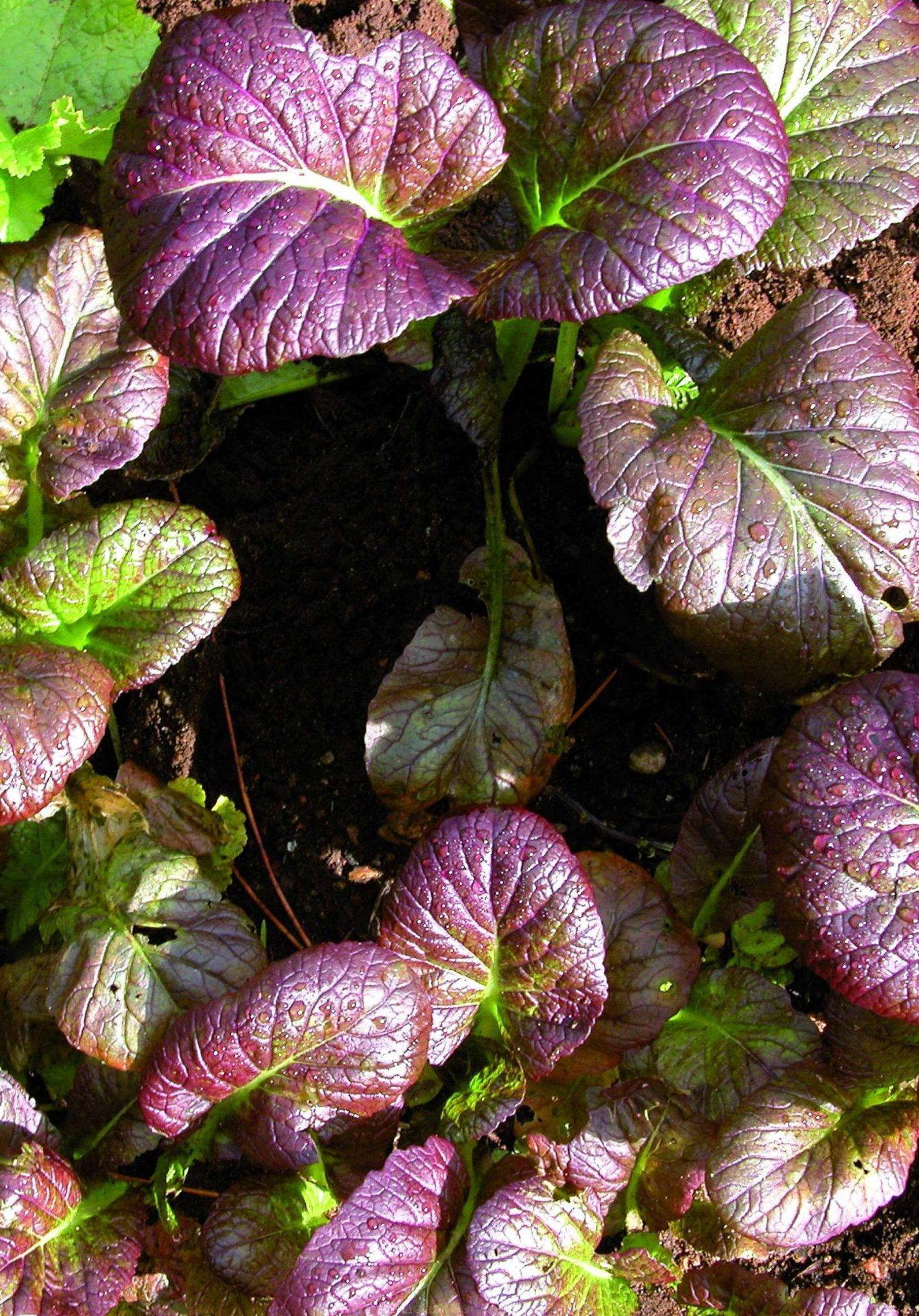
Osaka Purple mustard displays beautiful purple and green leaves, tangy in taste, excellent in mesclun and sandwiches.
Growing tips for Osaka Purple mustard
Gardening articles related to Osaka Purple mustard
Our osaka purple mustard seeds are certified organic.
We use natural, eco-friendly methods to grow our plants, without pesticides, herbicides, or chemical fertilizers. By choosing our organic osaka purple mustard seeds, you support a responsible, nature-friendly approach.
Learn more:
Red mustard
The leaves of this mustard, flatter than those of green-leaved mustard, are adorned with a superb red to mauve color. Its flowers are also yellow. It is used like green-leaved mustard.
Yves Gagnon
Growing conditions for mustards
Mustard leaves are cool-climate species that tolerate temperatures as low as -5°C. They are grown in full sun in early spring or autumn. Drought and heat make their flavor strong and bitter; if you want to grow them in midsummer, you should definitely place them in partial shade. They prefer fresh, humus-rich soils; all soil textures are suitable. To achieve optimal quality, the soil must be kept moist. Amend the soil with 500 kg of mature compost per 100 m2. The ideal pH for growing them is between 5.8 and 6.2, although they tolerate a pH of 7.
Mustard Crop Rotation
Mustard is preferably grown in the second year of rotation after growing plants that require young compost.
Companionship of mustards
Mustard can be grown alongside most leafy vegetables. For example, it can be combined with various lettuces and chicories, spinach, and other brassicas.
— These valuable tips were written by Yves Gagnon, in the book The ecological cultivation of vegetable plants , Colloidal Editions.
