


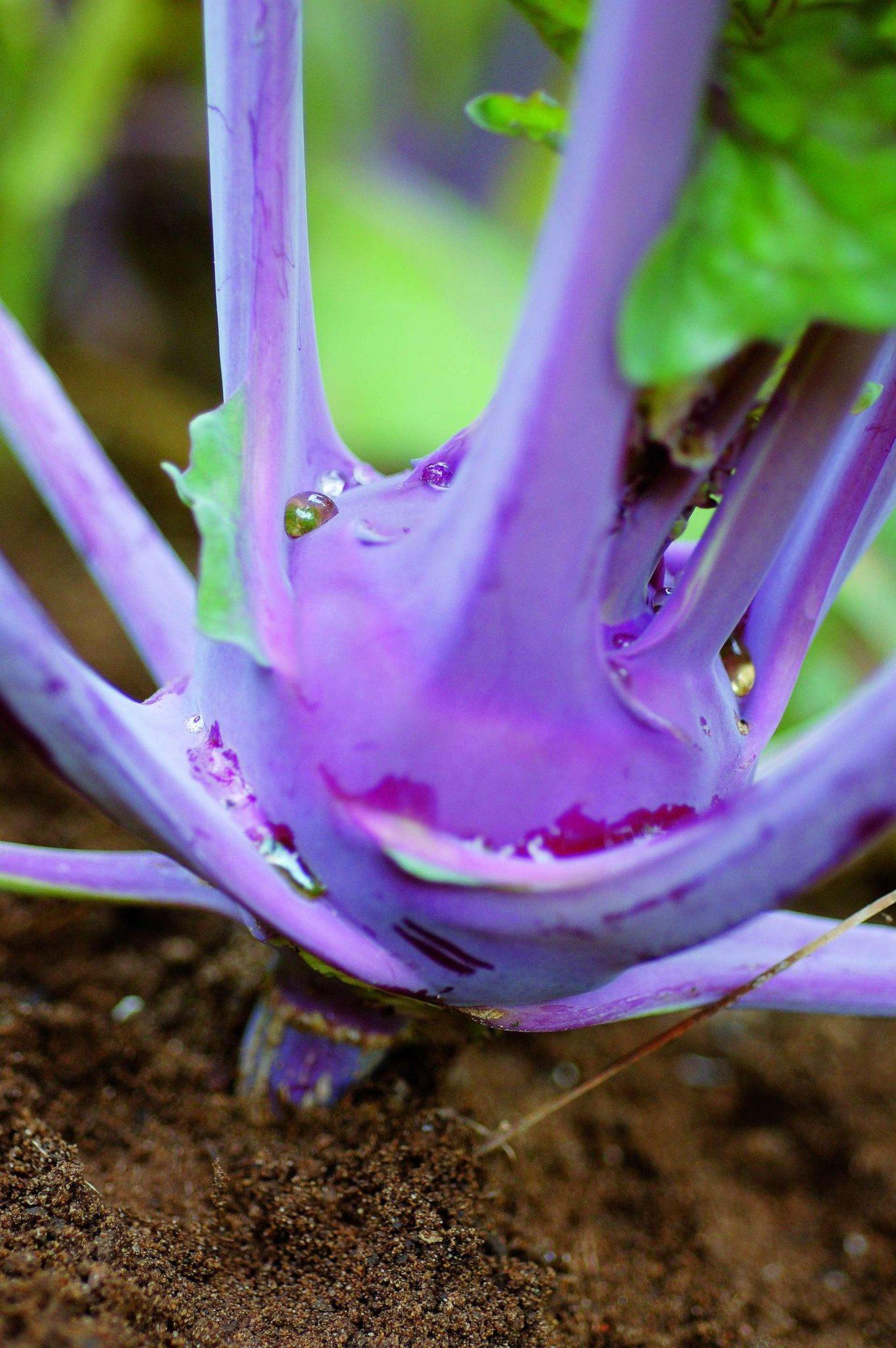
About Azur kohlrabi
Azur Kohlrabi is a round, fleshy vegetable with purple skin and white flesh that tastes like apple and turnip. Excellent as a raw vegetable. Insect netting is recommended to prevent midge.
Growing tips for Azur kohlrabi
Our azure kohlrabi seeds are certified organic.
We use natural, eco-friendly methods to grow our plants, without pesticides, herbicides, or chemical fertilizers. By choosing our organic azure kohlrabi seeds, you support a responsible, nature-friendly approach.
Learn more:
Yves Gagnon
Kohlrabi Growing Conditions
Like all brassicas, kohlrabi is a cool-climate vegetable that tolerates frost. It is grown in full sun, preferably in deep, loose, humus-rich soil. It tolerates heat well. However, it must be provided with constant moisture, as a lack of water makes the head tough and fibrous. As it is moderately demanding, poor soils can be amended with 500 kg of mature compost per 100 m2. Good yields are obtained without any compost, provided that previous crops have received good doses. The ideal pH for growing kohlrabi is between 6 and 7.
Kohlrabi Crop Rotation
Considered a leafy vegetable, kohlrabi is normally grown in the second year of rotation, with plants that require mature compost. However, as it is moderately demanding, it can also be grown with frugal plants in the third year of rotation. Brassica crops should be spaced at least 4 years apart.
Kohlrabi Companionship
Highly adaptable, kohlrabi can grow alongside many species, including those that require mature compost, such as lettuce, chicory and leeks, or less demanding species, such as parsnips, onions, beets, carrots and rutabagas.
— These valuable tips were written by Yves Gagnon, in the book The ecological cultivation of vegetable plants , Colloidal Editions.
