


SEMENCES
Amazing Cauliflower
About Amazing cauliflower
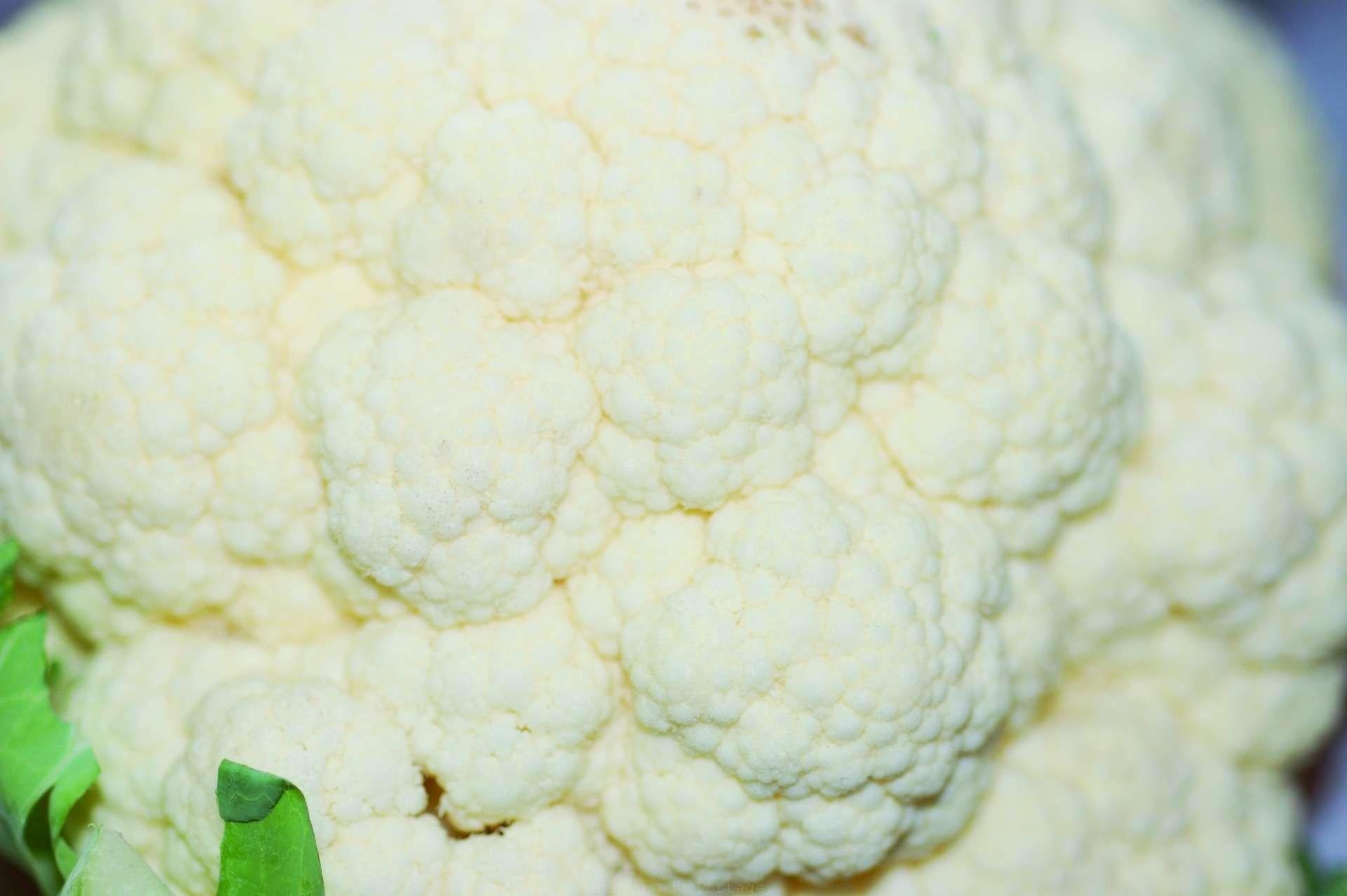
The Amazing cauliflower produces heads 15 to 18 cm in diameter, approximately 68 days after transplanting. Its wrapping leaves close over the head on their own, allowing it to blanch without the need for tying. Tolerant to both heat and cold, the variety is suited for late summer and autumn. Insect netting is recommended at all times to counter the swede midge. Untreated seeds.
Growing tips for Amazing cauliflower
Yves Gagnon
Cauliflower Growing Conditions
Like other brassicas, cauliflower thrives in cool temperatures. It reacts poorly to frost and temperatures above 24°C, which result in the formation of less dense and smaller flower buds. The best quality is achieved by growing it for a late summer and autumn harvest; in spring, opt for early cultivars and protect the plants from the cold with a floating row cover or a mini-tunnel. Cauliflower is the most demanding of the brassicas. The best yields are obtained in well-structured, well-amended clay soils. This type of soil is improved with 1 t of mature compost per 100 m². In sandy soils, up to 2 t/100 m² can be applied. Cauliflower is demanding in nitrogen, calcium, magnesium, and molybdenum. Quality compost provides the soil with all these elements. Adding dolomitic lime ensures the presence of calcium and magnesium, while adding seaweed flour at a rate of 1 kg/100 m2 ensures sufficient trace elements. A boron deficiency causes the inflorescence to develop oily, ochre-colored spots that turn brown over time. To ensure the adequate presence of boron, borax can be added to the soil at a rate of 100 g/100 m2. This should only be done once every 3 or 4 years, when the brassicas return to the rotation. Minerals must be available at the beginning of plant growth, because the inflorescence develops from the energy stored in the main leaves; there is therefore no point in fertilizing the plants during floral induction. Cauliflower requires constant moisture. In dry periods, it must be irrigated. Sprinkler irrigation is suitable. Applying mulch helps keep the soil moist and cool, which is conducive to the growth of the vegetable. The optimal pH for growing cauliflower is between 6 and 7.5.
Cauliflower Crop Rotation
Cauliflower is grown in the second year of rotation after growing plants that require young compost.
Companion planting of cauliflower
Cauliflower is associated with other leafy vegetables which, like it, are grown in the second year of the
rotation with additions of well-rotted compost. With this in mind, cauliflower combines very well with various lettuces and chicories, celery, Swiss chard, spinach, leeks or other brassicas. It could also be combined with celeriac, parsnips or beets. Most aromatic plants are beneficial to it, as they make it more difficult for pests to find them. Marigold, nasturtium and French marigold make good neighbors.
— These valuable tips were written by Yves Gagnon, in the book The ecological cultivation of vegetable plants , Colloidal Editions.
