Eggplant
Eggplant
Sensual, tropical and exotic
When we arrived in Saint-Didace 45 years ago, eggplant cultivation was systematically doomed to failure due to springs that were too cold and a season that was too short, which did not allow the few fruits that formed on the plants to ripen. Today, with a frost-free period that has increased by 40 days in 45 years, with the evolution of genetics combined with the application of cold protection techniques, it is possible to harvest good quantities of these tropical fruits up to zone 4, which, thanks to their vast culinary potential, allow us to playfully diversify the menu.

While the nightshades we know—tomato, potato, chili, bell pepper, and ground cherry—are native to tropical and subtropical America, the eggplant comes to us from India. It reached Europe via Spain, where it was introduced by the Arabs in the 13th century. However, it wasn't until the 16th century that it crossed the Pyrenees to reach France. Its popularity there was not instantaneous, however; the French even called it the "madman's apple" and the "unhealthy apple" at that time. However, it gradually spread throughout the country from the south. It then reached America with the first Spanish settlers. Long marginalized in North American cuisine, the intermingling of populations nevertheless contributed to its discovery. Depending on cultural influence, it is prepared parmigiani, stuffed, fried, pan-fried, in ratatouille, moussaka, or baba ghanouj.
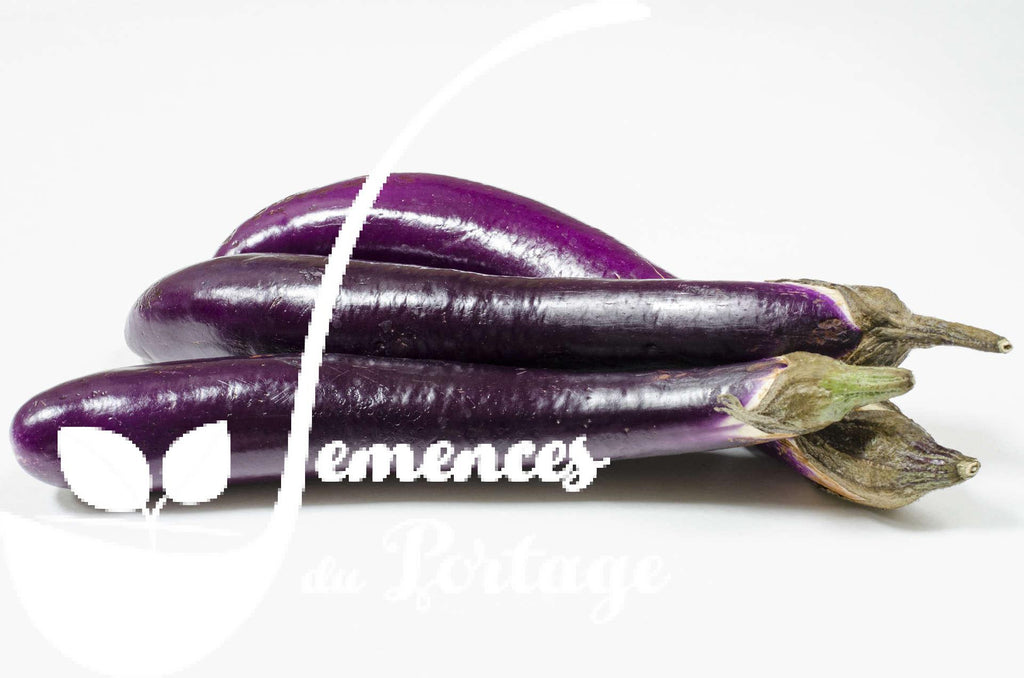
Italian and Oriental cultivars produce long, elongated fruits that are less bitter than the large, oval eggplants common in grocery stores. Hardier and earlier-ripening, these cultivars perform better in northern gardens. Good harvests are reported north of the St. Lawrence River with the Italian Long Purple, the Orient Express, the Ping Tung Long , and the Diamond, which is said to have long been cultivated and selected in Ukraine. The latter produces exceptional results at my home in Saint-Didace.
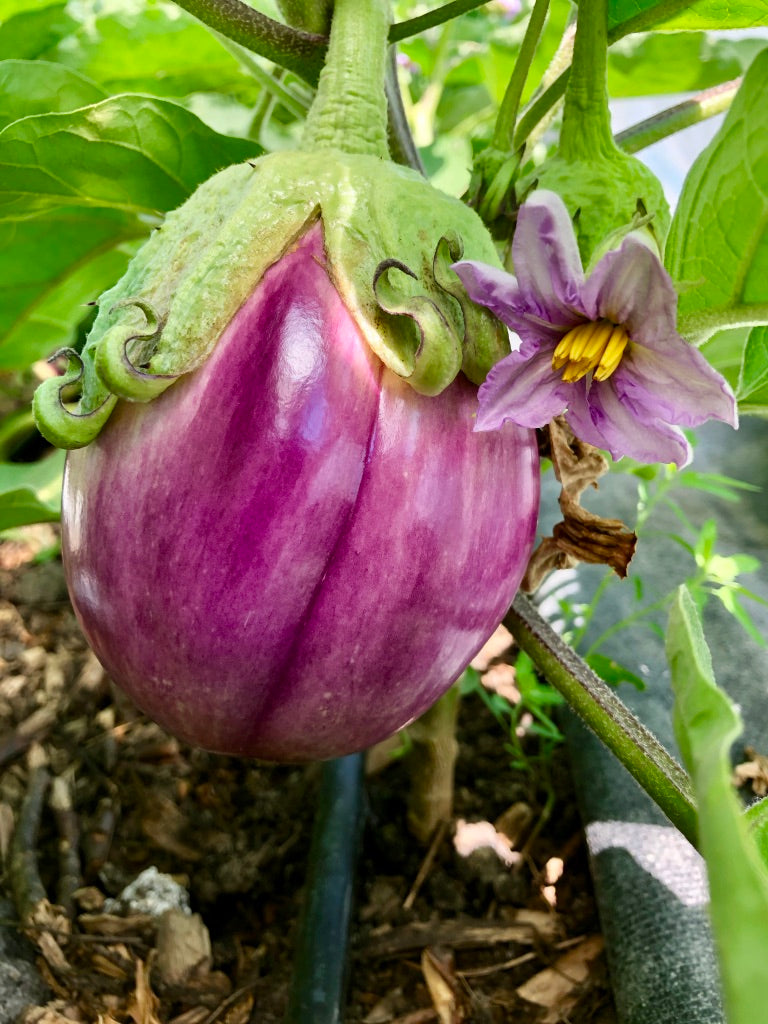
In southern Quebec, you can opt for later-ripening lines such as Black Beauty, Dusky, and Rosa Bianca. To successfully grow this nightshade, sow it indoors at the end of March. Plants can also be found at markets, nurseries, or garden centers. Transplant the plants into the garden once the risk of frost has passed, in well-loosened soil that has been generously enriched with compost, in a staggered pattern every 35 cm. On cool June nights, to encourage fruit set, cover the plants with an upside-down container, which can be covered with an insulating cloth if necessary. The magnificent flowers with mauve corollas produce fleshy berries that vary in shape and color depending on the cultivar. The fruits are purplish, mauve, almost black, sometimes pink, and even white.
Young eggplants are harvested before the seeds ripen and the bitterness develops. Last summer, thanks to favorable weather conditions, I harvested about a hundred fruits from the twenty established plants, which allowed me to consume them daily in addition to making a good reserve in the freezer in the form of ratatouille and baba ghanouj. This purée, very popular in the Middle East, is prepared by first cooking the fruit in the oven, pierced in a few places with a knife blade. After a stay of 45 minutes to 60 minutes in an oven at 190 °C, the fruit is peeled and the flesh is collected, which is transferred to a blender. Garlic, lemon juice, sesame butter, salt and pepper to taste are added, then the appliance is activated to obtain a smooth purée that is used as a dip or sandwich filling.
Pan-fried in slices in olive oil, cooled, and then tossed with a lemony garlic vinaigrette, it's divine. Grilled over a wood-fired coals, it's incomparable. Once cooked, it keeps for a few weeks in the refrigerator in a glass container, covered with an oil seasoned with garlic and herbs. Last summer, with the bountiful harvest, I got into the habit of adding it pan-fried to my tomato sandwiches with thin slices of sweet onion, a few fresh basil leaves, and a thin layer of homemade mayonnaise. You never tire of something ordinary that's so extraordinary.
Yves Gagnon, author and seed producer