The art of direct seeding
In the garden, many species are propagated by indoor sowing. This is the case for tropical species which, when sown directly in the garden, do not have enough time to ripen their fruits and give a harvest worthy of the name; this is the case for tomatoes, chilies, peppers and eggplants. Some northern species, because of their long growth time, also require indoor sowing. Examples include celeriac , artichoke , parsley , rosemary, sage and thyme . Other plants can be propagated both by indoor sowing and by direct sowing. Indoor sowing will hasten the harvest, but direct sowing will still allow for an abundant harvest. Examples include headed cabbage , broccoli , cauliflower , lettuce and chicory . Finally, a good number of species are propagated exclusively by direct sowing, either because they do not tolerate transplanting or because sowing in boxes would prove tedious. This is the case for cucurbits, corn , peas , beans , carrots , parsnips and beets .
Among the species that are propagated by direct sowing, some are hardy, and therefore resistant to frost. They can therefore be sown as soon as the soil is ready to be worked, i.e. from the beginning of May for most of them. This is the case for some greens including rocket , mustard , lamb's lettuce, Swiss chard , chicory , spinach and lettuce as well as a range of roots including turnip , rutabaga , radish , beetroot, carrot, parsnip and salsify. Peas are also sown at the same time. Finally, among the species that are propagated by direct sowing, there are those that should only be established once the risk of frost has passed. This is the case for cucurbits and beans that need warmth to germinate and would succumb to exposure to frost.
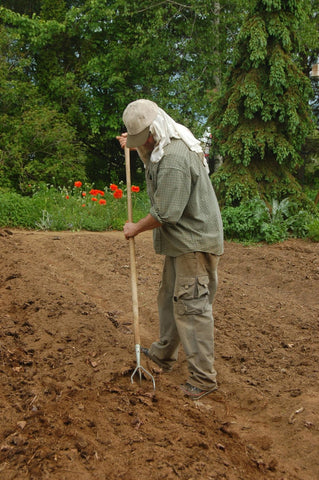
To successfully sow directly, you must first prepare the seedbed well. I like to sow on mounds 75 to 90 cm wide, separated from each other by paths, which helps maintain the soil structure throughout the season. Then, using a claw, I dig the furrow intended to receive the seeds. Since the seeds must be covered with three times their thickness of soil, the depth of the furrow varies according to the diameter of the seed.
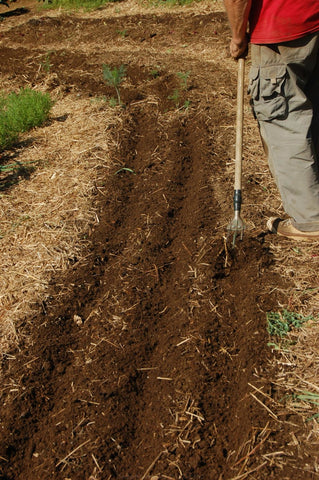
Once the furrow is dug, I place the seeds in it according to the recommended density.

Then I cover the seed with soil using the claw.
 I finish the operation with a light filling that I carry out using a re-soaking spade which restores the capillarity of the soil and promotes optimal germination, even in dry conditions.
  There you have it. Now that direct seeding is no longer a secret, you can now devote yourself to gardening. It's a wonderful way to reduce stress, banish gloom, and savor fragments of happiness.
By Yves Gagnon , seed producer and owner of Jardins du Grand-Portage