


About Black Portage tomato
Exclusive. The Noire du Portage tomato produces small, red tomatoes tinged with black. Developed at the Jardins du Grand-Portage. Resistant to cracking and with an alluring flavor. Indeterminate.
Germination in warm conditions recommended. Transplant after the last frost.
Growing tips for the Black Portage tomato
Gardening articles related to the Black Portage tomato
Are your plants affected by Alternaria?
A disease caused by a fungus.
There's a lot you can do to prevent this disease. Promote good air circulation by managing companion planting, disinfect stakes before installing them, use new ropes to tie plants, and finally, spray plants once a week with a 10% milk solution (one part milk, 9 parts water). Do not touch diseased leaves as you will spread the fungus. Fertilization and choosing an appropriate location also play a role in the health of plants.
Indeterminate tomato
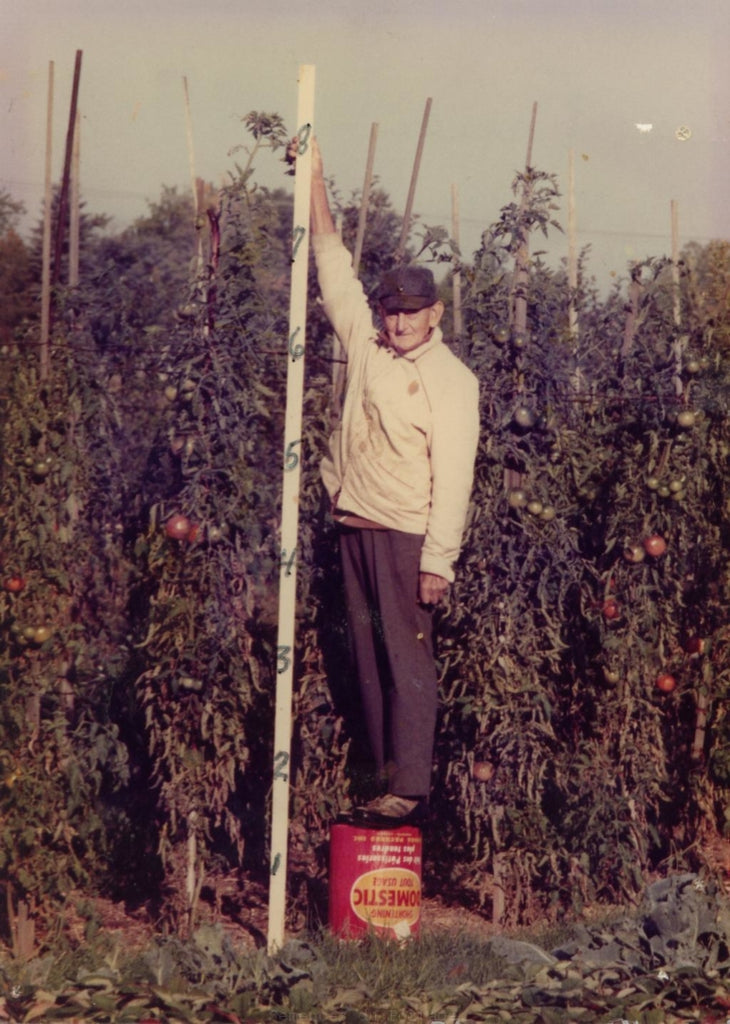
≪The ancestor of the modern tomato was a trailing plant producing several stems; the first cultivated tomatoes thus produced long stems that could reach 2 m or more. Indeterminate tomatoes are directly descended from this lineage. They normally produce 3 branches of leaves for 1 cluster of fruit. Because of this favorable ratio between leaf area and the number of fruits produced, indeterminate cultivars produce tasty fruits.
Indeterminate cultivar plants thrive as long as the climate and soil permit. They produce more abundantly, but also later, a disadvantage in regions with a short season. The plants produce numerous suckers that must be pruned regularly. They must be staked.
— Yves Gagnon, The ecological cultivation of vegetable plants, Les Éditions Colloïdales.
Yves Gagnon
Growing conditions for tomatoes
The tomato is a light and heat-loving species. The fruits lose their quality in the cold. In northern regions, it is propagated by indoor sowing and transplanted outdoors once the danger of frost has passed.
Tomatoes are best grown in loam soil rich in humus. They thrive in light, well-amended soils and well-structured, clayey soils shaped into beds. Heavy, damp, and compact soils are not suitable for them.
Tomatoes are greedy; they appreciate an abundance of young compost. Therefore, when growing them, apply 1 to 1.5 tonnes of young compost per 100 m2. You can also add a shovelful of compost to the transplant hole. Applying plant mulch once the soil has warmed up, as well as regular additions of liquid manure, will stimulate their growth and productivity.
Calcium is important for fruit development and quality, while phosphorus contributes to fruit set. Adding 30 ml of mineral phosphate and hardwood ash to the transplant pit helps meet the plants' needs for these elements.
To achieve maximum yield and quality fruit, humidity levels must be constant: a drip irrigation system helps achieve this goal. Plants can also be irrigated at the base with lukewarm water as needed. Sprinkler irrigation is not recommended.
The pH for its cultivation is between 6 and 7.
Tomato Crop Rotation
Tomatoes are grown at the head of the rotation after green manure crops. Despite what some books claim, due to their high susceptibility to disease, it is better to separate tomato cultivation from any other solanaceous crop by at least 4 years.
Companion planting of tomatoes
The classic companion plant for tomatoes is basil and parsley. However, since common basil easily reaches a height of 50 to 60 cm, a combination with this labiate hinders air circulation at the base of the plants, which encourages the development of fungal diseases. Parsley, small-leaf basil, and white clover are therefore better companion plants to plant between plants. At the end of beds or to separate two cultivars, you can plant common basil, borage, or tithonia. Tomatoes grow well alongside artichokes, eggplants, cucumbers, and peppers. Avoid planting them with potatoes, corn, and fennel.
Simple tips to sow in your community:
Monthly sprays with a liquid seaweed solution strengthen the plants. Weekly sprays starting in mid-July with a 10% organic milk solution prevent fungal diseases.
— These valuable tips were written by Yves Gagnon, in the book The ecological cultivation of vegetable plants , Colloidal Editions.
