


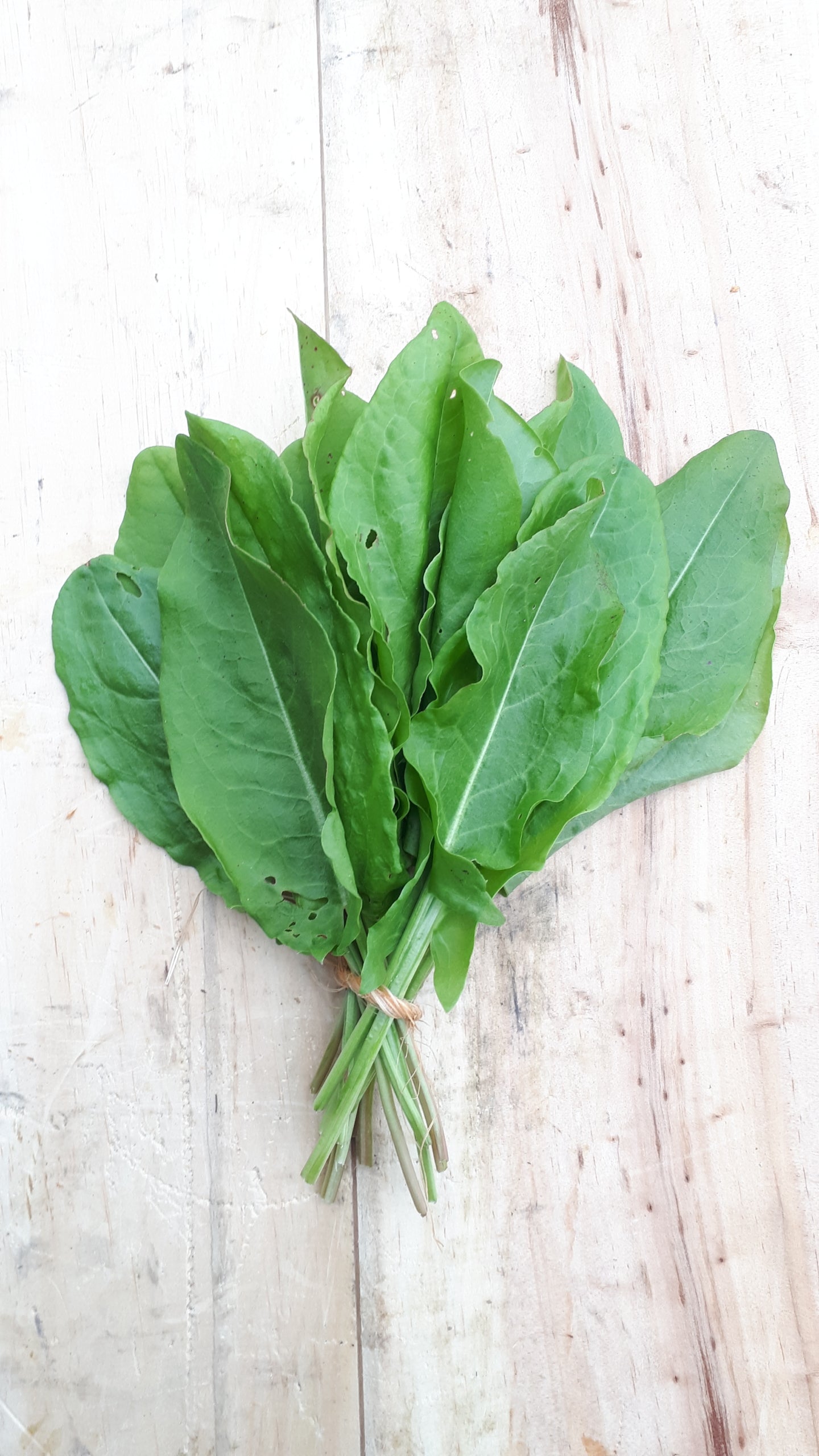
About green sorrel from Belleville
Spring lanceolate greens. Tangy taste that complements fish, sauces, and salads. Multiple harvests throughout the season.
Growing tips for green sorrel from Belleville
Our green sorrel from belleville seeds are certified organic.
We use natural, eco-friendly methods to grow our plants, without pesticides, herbicides, or chemical fertilizers. By choosing our organic green sorrel from belleville seeds, you support a responsible, nature-friendly approach.
Learn more:
Yves Gagnon
Growing conditions for sorrel
Sorrel is grown in fresh, humus-rich soil. It can be planted in full sun, but prefers a semi-shaded site. It is frost-resistant; in fact, it is one of the first vegetables to be harvested.
in spring. To grow it, amend the soil with 500 kg of mature compost per 100 m2, or a small shovelful per plant. A pH between 6 and 7 is suitable.
Sorrel Crop Rotation
Since sorrel is a perennial plant, it does not take place in the rotation cycle with the others
annual vegetable plants. It should be given a place in a perennial border, in association with flowers or herbs.
Sorrel Companionship
Sorrel can be combined with many perennial species such as thyme, tarragon, chives,
lavender, rhubarb, and a multitude of flowers. You just have to make sure the species has enough space and light to grow.
— These valuable tips were written by Yves Gagnon, in the book The ecological cultivation of vegetable plants , Colloidal Editions.
