


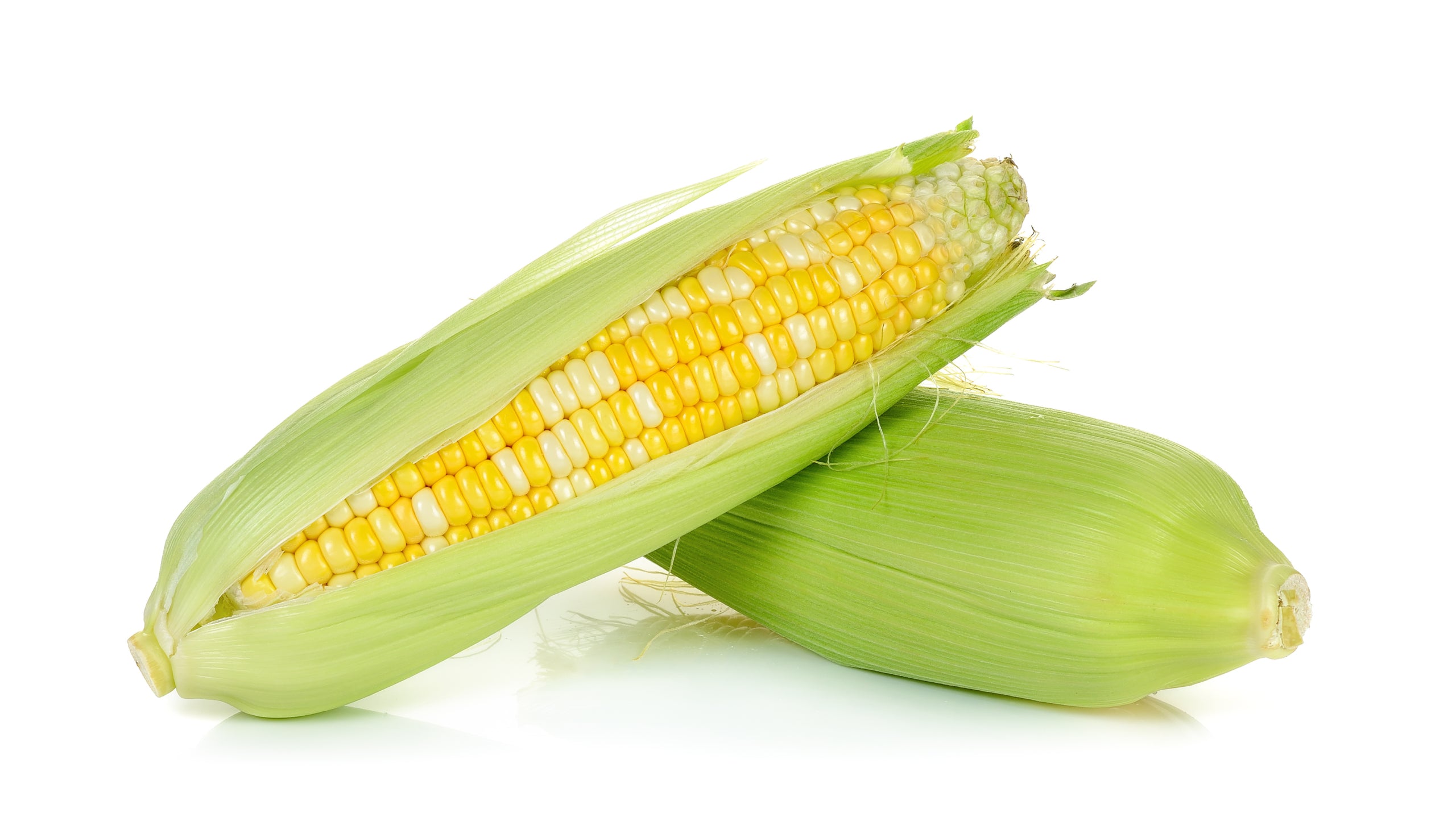
About sweet corn who gets kissed
Two-color SE (Increased Sugar) corn. Suggested for zones 4 and 5. 20 cm cob.
It is best to pre-germinate seeds before sowing them in the ground. This involves soaking the seeds in lukewarm water in a temperate area of the house. After 12 hours, remove the water and rinse them twice a day. 2 to 3 days later, the sprout should appear. It's time to sow. Make sure to keep the soil moist to avoid interrupting the germination process.
It is recommended to replant the plants when they are 20 cm tall.
Growing tips for the sweet corn who gets kissed
Our sweet corn who gets kissed seeds are certified organic.
We use natural, eco-friendly methods to grow our plants, without pesticides, herbicides, or chemical fertilizers. By choosing our organic sweet corn who gets kissed seeds, you support a responsible, nature-friendly approach.
Learn more:
Sweetcorn
North Americans love sweet corn; they eat it when the grain is immature, at its peak sugar content. At harvest time, they gather for the traditional corn roast, which for many is a harvest celebration. Sweet corn is classified according to its sugar content.
Classification according to sugar level
Crossbreeding over the past few decades has led to the creation of corn cultivars with varying sugar levels. This results in four main categories.
The cultivars Se, Se+
The name Se comes from the English term "sugar enhanced." They contain a gene that significantly increases the sugar content of the grains, a level that is maintained on the plant for a week after the ears have reached maturity and for a week after harvest if the ears are quickly refrigerated. Since the grains of these cultivars are very tender, their
ears are less resistant to handling. Corn cultivars are derived from a cross between
a Su cultivar and a Se cultivar while a Se+ comes from a cross between two Se cultivars. The young
plants are not very resistant to spring frost. All are hybrids.
Yves Gagnon
Corn growing conditions
Corn is native to desert regions. Despite its adaptability, the species still thrives on light and heat while remaining drought tolerant. Corn can be grown in all mineral soils, with lighter soils favoring early vegetable crops and heavier, clayey soils offering higher yields. Corn requires a high level of compost or young manure. The soil can be amended with 2 tons of compost or young manure per 100 m2. The optimal pH for its cultivation is between 6 and 6.8.
Corn crop rotation
Corn is grown at the head of the rotation. A rotation of 4 years or more is recommended. If smut occurs, a rotation of at least 7 or 8 years is recommended.
Corn companionship
Corn makes an excellent companion to cucurbits; it should be planted to the west of them to act as a windbreak without shading them. Early lettuce can be transplanted between the rows of corn immediately after emergence. Intercrops can also be established between the rows to create a ground cover that will control competition, protect the soil from erosion, and serve as a fall green manure. The species that seem to give the best results are red clover, white clover, and hairy vetch. They are broadcast after hand or mechanical hoeing when the corn is 15 to 20 cm tall. The seed is buried by shallow tillage.
— These valuable tips were written by Yves Gagnon, in the book The ecological cultivation of vegetable plants , Colloidal Editions.
