


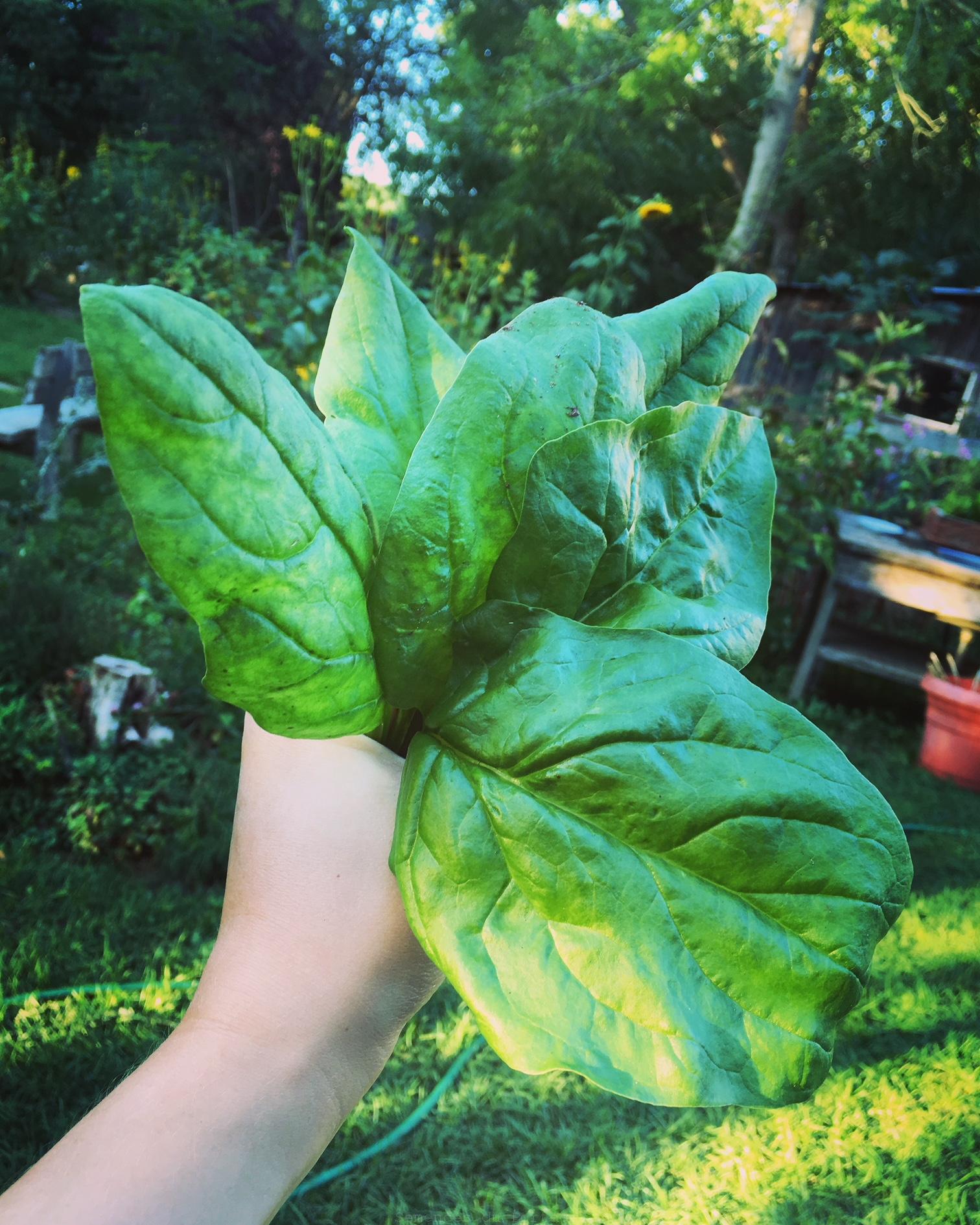


About Giant Winter Spinach
Productive and cold-hardy, Giant Winter spinach produces large green leaves at maturity. Perfect for fall production. Thin out for best results.
Growing tips for Giant Winter Spinach
Gardening articles related to Giant Winter Spinach
Our giant winter spinach seeds are certified organic.
We use natural, eco-friendly methods to grow our plants, without pesticides, herbicides, or chemical fertilizers. By choosing our organic giant winter spinach seeds, you support a responsible, nature-friendly approach.
Learn more:
Yves Gagnon
Growing conditions for spinach
Spinach is frost-resistant. It produces well in cool spring and fall conditions. With the heat of summer, it stops its vegetative development and flowers. It thrives in well-structured, humus-rich organic or clay soils. It is best suited to sandy soil amended with mature compost and irrigated as needed. Spinach is demanding. Its soil should be amended with 1 t of mature compost per 100 m2. A pH between 6 and 7.5 is ideal for it. It is best to avoid using young compost, fresh manure, and nitrogen fertilizers when growing it.
Spinach Crop Rotation
Spinach is grown in the second year of rotation, after a crop requiring young compost. However, it can be grown at the head of the rotation, provided that fertilization is adapted to its needs.
Companion planting of spinach
Since spinach is sown early in the spring, it can be planted with late-season crops, such as cabbages, to save space. It also combines well with lettuce, chicory, lamb's lettuce, and arugula. It can be grown between rows of asparagus.
— These valuable tips were written by Yves Gagnon, in the book The ecological cultivation of vegetable plants , Colloidal Editions.
