


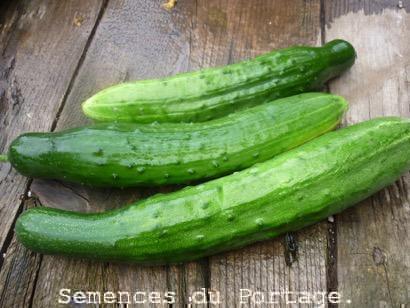


Aunt Alice's Cucumber
How about growing an heirloom cucumber this summer with a distinctive flavor and delicate texture? With its slightly spiny skin and 15 to 18 cm long, the Tante Alice cucumber is sure to meet your needs for an exceptional cucumber. It was developed and selected by Marie-Alice Gosselin, born on February 15, 1910, in Saint-Lazare-de-Bellechasse, the tenth of a family of eleven. At a very young age, she learned about gardening and developed a true passion for vegetable genetics as well as for experimenting and selecting cultivars. Married to Irénée Laflamme, she raised her family and devoted herself as much as she could to her passion until 1995, when she had to move into a residence. It was then that her nephew, Marcel Gosselin, gave Antoine d'Avignon some cucumber seeds found in Marie-Alice's stash. Antoine, who is deeply involved in preserving Quebec's genetic heritage, experimented with this cucumber, which he found promising. He and Marcel decided to name it Aunt Alice in honor of the woman who had bred it for decades. It is unclear whether this cultivar was produced by crossbreeding or simply by selection, but one thing is certain: it is part of Quebec's genetic heritage, and all those who plant it in their gardens take great pride in it. Yves Gagnon has been cultivating and improving it since 2008 and has since offered it to his customers, who became ours in 2015.
About Aunt Alice's cucumber
The Tante Alice cucumber is a cultivar native to the Bellechasse region of Quebec. Extremely productive. Delicate flavor and texture. Insect netting is recommended in June to combat the striped cucumber beetle. Pre-germination in a damp cloth is recommended before sowing. A temperature of 25°C gives the best results. As soon as the sprout appears, it can be sown in position in the garden in warmed soil.
Growing tips for Aunt Alice's cucumber
Gardening articles related to Aunt Alice's cucumber
Lemon cucumber
"Some seed companies offer round cucumbers, which are highly prized for their delicate flavor and unique shape. They turn yellow when ripe, but it is recommended to eat them at the pale green stage."
Yves Gagnon
Growing conditions for cucumbers
Cucumber is a heat-loving species. Since it grows quickly, it can be propagated by seed.
direct in most areas. It is sown when the soil has reached a temperature of 15 oC. Sensitive to
wind, it is beneficial to protect it from it. Cucumbers require a sunny location. They thrive best in light, deep, humus-rich soil. However, they do well in lumpy clay soil. They require young compost. Amend the soil with 1 to 1.5 t of young compost per 100 m2. Calcium is important for texture, while phosphorus is important for fruit set. The use of mineral phosphate and wood ash provides cucumbers with these two elements. Monthly fertigation with plant liquid manure increases plant productivity. It is important to irrigate during dry periods. Localized irrigation with a drip system is well suited to the species. In small gardens, manual watering can be carried out with lukewarm water. The recommended pH for growing cucumbers is between 6 and 7.
Cucumber Crop Rotation
Cucumbers are grown at the head of the rotation, ideally after a green manure crop.
Companion planting of cucumbers
Cucumbers should always be grown in a sheltered spot. Corn or sunflowers can serve as an annual windbreak. Since cucumbers are only sown when the soil is warm, early in the season, lettuce, other leafy vegetables, or radishes can be grown in the bed designated for them. These early crops should be planted at the edge of the bed so that the two crops can overlap for a while. Cucumbers also grow well alongside tomatoes, peppers, eggplant, and artichokes. Potatoes should not be planted with them. Marjoram, basil, and dill are good companions for cucumbers.
— These valuable tips were written by Yves Gagnon, in the book The ecological cultivation of vegetable plants , Colloidal Editions.
Our advice, your success!
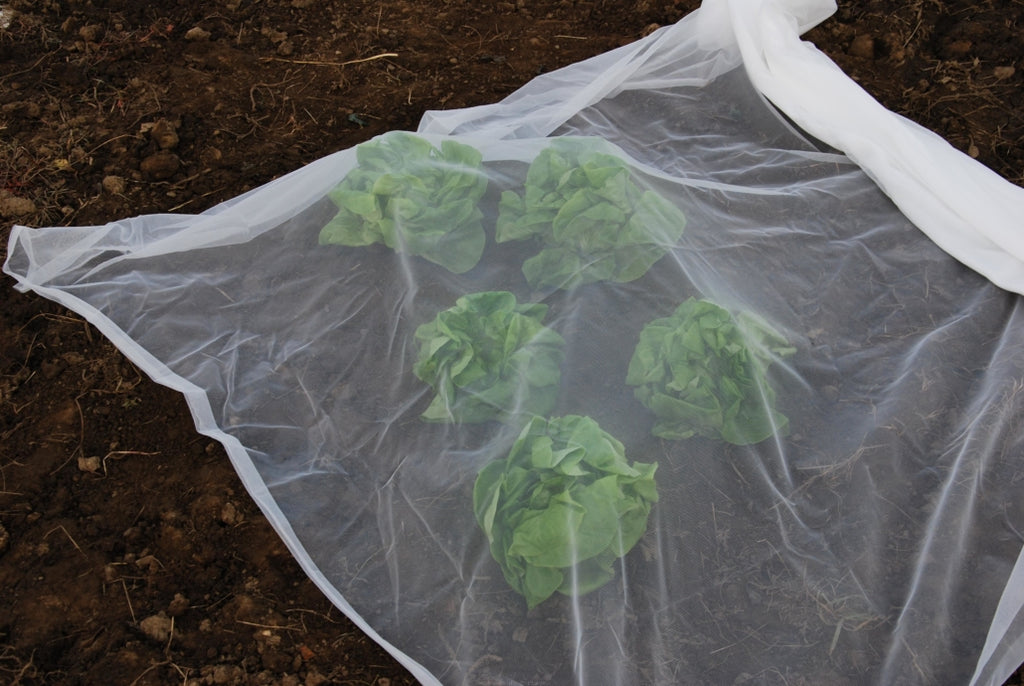
Insect netting before pollination
Insect netting is recommended for all cucurbits to combat the striped cucumber beetle. Be careful, it will be necessary to remove the netting when the flowers form or opt for hand pollination.
Seed pre-germination; simple and effective
For optimal germination, we suggest pre-germinating in a warm, moist cloth before sowing. A temperature of 25°C gives the best results. As soon as the sprout appears, you can sow in a warmed-up position in the garden.
Indoor sowing; fragile roots
Cucurbits have very fragile roots. If you start your cucurbit seedlings indoors, be sure not to damage the roots when transplanting them into the ground. Using a biodegradable pot is recommended.
