


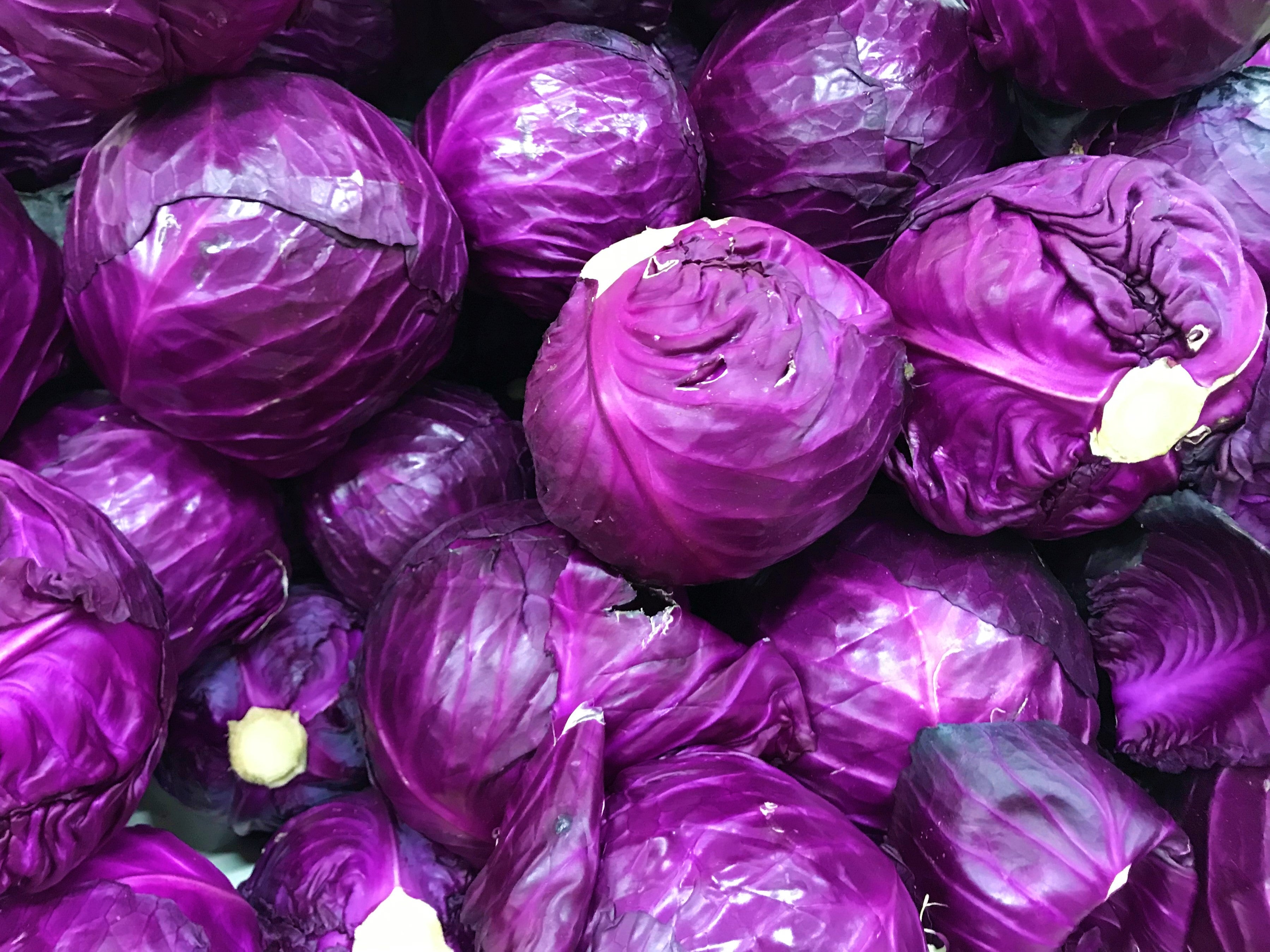

About Express red cabbage
Express summer red cabbage is early, tender, and very sweet. Sowing can be delayed until July for storage purposes. Insect netting is recommended before the head forms to prevent midge beetles.
Growing tips for Red Cabbage Express
Gardening articles related to Red Cabbage Express
Our red cabbage express seeds are certified organic.
We use natural, eco-friendly methods to grow our plants, without pesticides, herbicides, or chemical fertilizers. By choosing our organic red cabbage express seeds, you support a responsible, nature-friendly approach.
Learn more:
Red cabbage
More demanding and slower to grow, red headed cabbage is, however, less susceptible to pests than green cabbage. Late cultivars keep very well. Their purple or violet color adds a lovely touch to winter salads.
Yves Gagnon
Cabbage growing conditions
Cabbage, like other brassicas, is a cool-climate species. It achieves optimal quality in humid and temperate conditions. It is frost-resistant, especially winter and Savoy cabbages, which tolerate autumn temperatures as low as -10°C. Northern regions are therefore ideal for growing cabbage. Cabbage requires full sunlight. It is best grown in cool, moist, well-drained, humus-rich soils. Well-structured clay soils are ideal for its cultivation, but light soil, well-amended and irrigated as needed, also allows for good yields. Cabbage requires mature compost. When growing it, the soil should be amended with 1 t of mature compost per 100 m². Cabbage, like other brassicas, requires boron. To ensure the presence of this element, borax can be added to the soil at a rate of 100 g/100 m². Cabbage reacts poorly to drought. During dry periods, it is therefore necessary to irrigate. Applying mulch helps keep the soil more evenly moist and cool, which is beneficial to the species. The optimal pH for growing cabbage is between 6 and 7.
Cabbage crop rotation
Cabbage is grown in the second year of rotation after growing voracious plants.
Companionship of cabbage
Cabbage is associated with other leafy vegetables which, like it, are grown in the second year of rotation with additions of mature compost. In this spirit, cabbage associates very well with various lettuces and chicories, celery, Swiss chard, spinach and leeks. It could also be associated with celeriac or beetroot. Most aromatic plants are beneficial to brassicas, because they make them more difficult for pests to locate. Marigold, nasturtium and French marigold are also good neighbors. You can grow
white clover as an intercropping plant.
— These valuable tips were written by Yves Gagnon, in the book The ecological cultivation of vegetable plants , Colloidal Editions.
