


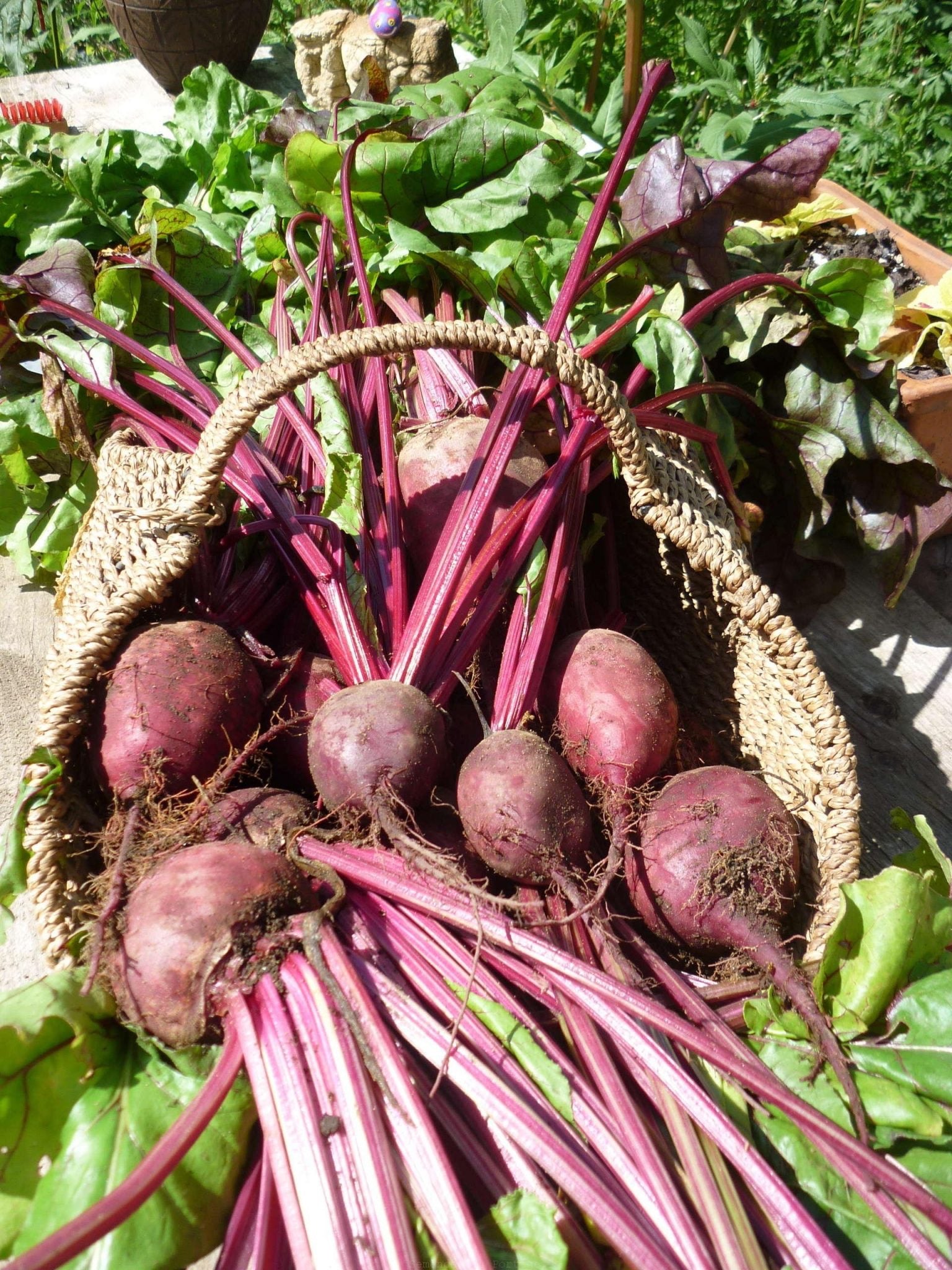
About Detroit Dark Red beetroot
Detroit Dark Red beetroot is a very tasty, purple-colored, spherical summer beetroot. A classic cultivar. Beware of cutworms and earwigs.
Growing tips for Detroit Dark Red beetroot
Gardening articles related to Detroit Dark Red beetroot
Our detroit dark red beetroot seeds are certified organic.
We use natural, eco-friendly methods to grow our plants, without pesticides, herbicides, or chemical fertilizers. By choosing our organic detroit dark red beetroot seeds, you support a responsible, nature-friendly approach.
Learn more:
Yves Gagnon
Beetroot growing conditions
Beetroot requires a sunny site. It reacts poorly to excessive heat and appreciates cool conditions while tolerating light frosts. It prefers clayey, humus-rich, and well-structured soils. It produces well in light soils if moisture is constant. Drought and excess water are harmful to it, as are temperature fluctuations. To grow it, the soil must be loosened deeply, more so for cylindrical cultivars. Beetroot is moderately demanding. Small amounts of mature compost are suitable. In rotation, when it follows a demanding, well-amended crop, it can produce good yields without adding compost. Fresh manure and young compost should be avoided. The presence of boron is important for this vegetable. Browning of the heart indicates a deficiency in this element. Fertilization with borax is recommended when a deficiency is diagnosed. A pH between 6 and 7.5 is suitable for it, but the ideal pH is between 6.5 and 7.
Beet crop rotation
Beetroot is grown in the second or third year of rotation, after growing a demanding plant. Beetroot follows well after an early crop of lettuce, radish, lamb's lettuce, or spring chicory.
Beetroot companionship
Beetroot is associated with onions, carrots, parsnips, kohlrabi, and rutabagas. It can be grown alongside beans and cabbages.
— These valuable tips were written by Yves Gagnon, in the book The ecological cultivation of vegetable plants , Colloidal Editions.
