Autumn green manures
Autumn green manures
One of the basic principles of ecological gardening is to establish a plant cover that is as permanent as possible. To this end, some use mulch, but here at Jardins du Grand-Portage, for a multitude of reasons—lack of organic matter to cover 1.5 acres, aesthetic considerations, slug problems, to name a few—we do not apply inert materials to the soil, but favor the use of living ground covers, mainly green manures. These crops can colonize the soil early in the spring before the establishment of a late crop—beans, cabbage, chili peppers, bell peppers, eggplant, ground cherries, melons—or in late summer or early fall, after the harvest of certain vegetables. During the summer, judiciously planned companion planting allows us to create, from the end of July, an almost total plant cover.
Fall green manures help maintain a stunning vitality in the garden, characterized by deep, vibrant shades of green that sparkle until the first frost, giving gardeners saddened by the loss of plants that have succumbed to frost a new source of wonder. Here I present to you different species of ground cover that can be established as fall green manures, with supporting photos taken at the Jardins du Grand-Portage on October 2.

Above, fall rye sown after a sweet corn crop. The stems of the poaceae were cut back at the root collar, and the rye was established the first week of September. The seeds are broadcast, then I run the tiller over the surface, at a depth of 5 cm, at most. For small areas, you can also use a three-pronged claw. Germination takes 5 to 8 days, with rain accelerating emergence. Fall rye, in addition to effectively preventing leaching, protects the soil from wind and water erosion and improves soil structure. It survives the harsh winter. It is plowed in the spring, two to three weeks before the crops are established. The cereal is, however, difficult to destroy: two or three passes with the tiller or two turns with the fork are necessary to get rid of it; This is why some people prefer oats, which do not survive the winter. Sowing rate: 2 kg/100 m2.

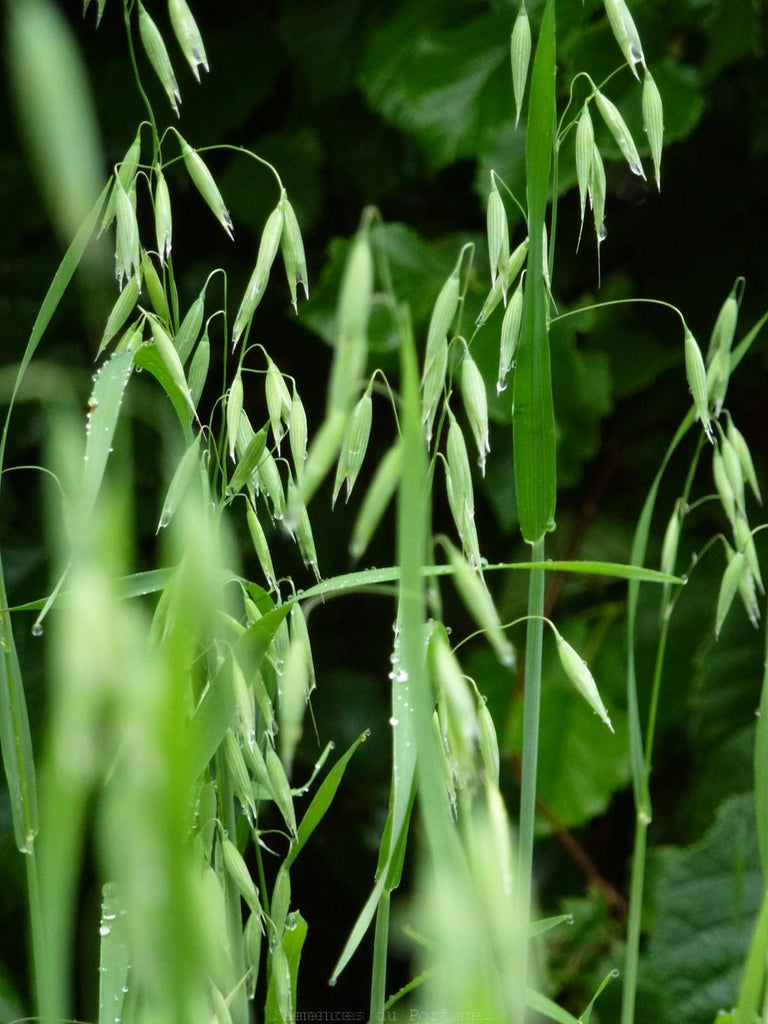
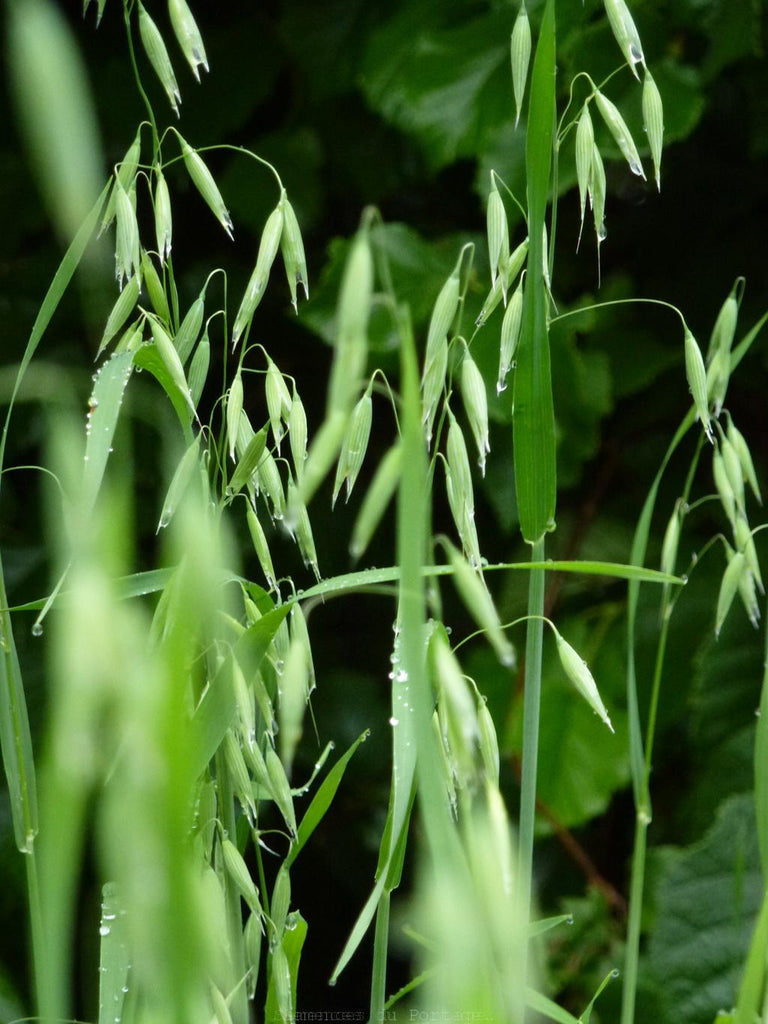
Here, a slightly sparse oat green manure. The sowing done by an intern could have been denser. Unlike rye, oats do not survive the winter. It is chosen when followed by an early spring crop such as onions, carrots, beets, lettuce, spinach, or peas. Very hardy, oats respond well to cold conditions. They grow in all types of soil. Frost tolerant, they can be sown early in spring, or in late summer as a fall green manure. I use them a lot as a fall intercrop species, especially between perennials. They can be sown from late August to mid-September in zone 4, until the first of October in southern Quebec. Seeding rate: 2 kg/100 m2.

The forage pea was established here after a cucumber crop. An excellent nitrogen fixer, the pea will be dug in just before the first frost. Seeding rate: 2 kg/100 m2.
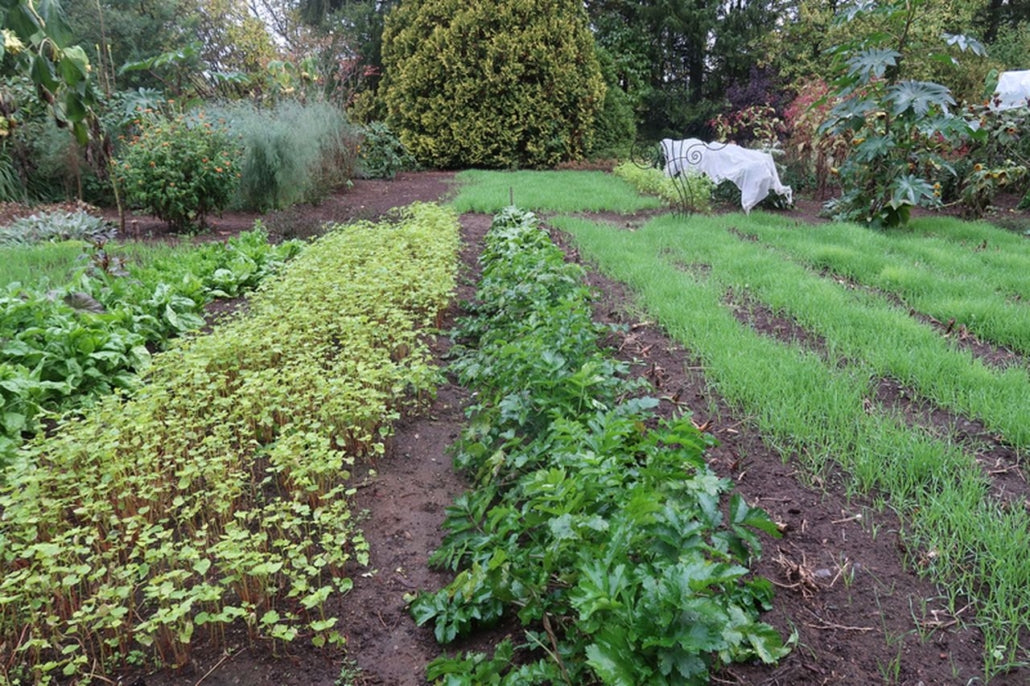
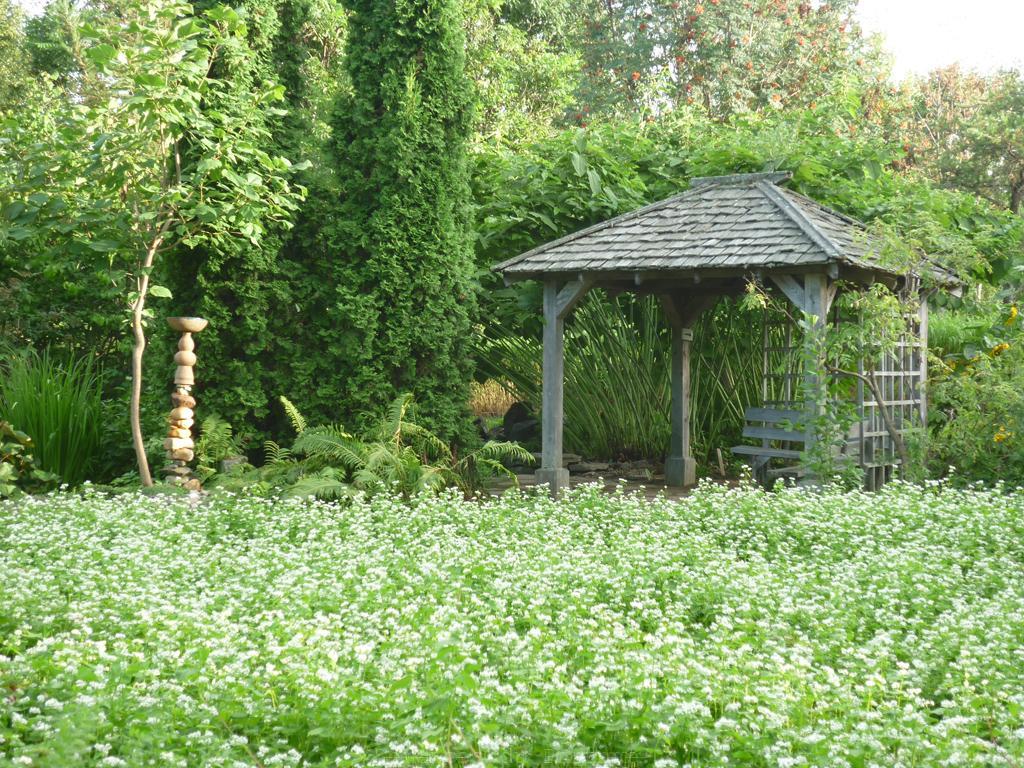
In this photo above, a strip of buckwheat sown after a shallot harvest. On the right, a row of Harris Model parsnips then autumn rye on corn and behind, on potatoes. The crop protected from frost by an anti-insect fabric at the top right of the photo is the Red Maskinongé pepper . The buckwheat will be buried before the first frost. Very effective at smothering weeds, buckwheat is left to grow for 30 to 40 days. It is buried at the end of flowering. Its flowers attract many beneficial insects. Sensitive to frost, it is sown in spring once the risk of frost has passed. Sowing rate: 2 kg/100 m2.

Here, rye is interspersed with buckwheat from the previous sowing. This plot was established throughout the season as green manure. Sown in May, the forage pea was followed in June by buckwheat. The rye that succeeded it will be plowed in the spring. Voracious vegetable crops will then be established. Tomatoes, eggplants, artichokes, and cucumbers are included in my planning for this now enriched and healthy plot.
The information presented in this blog is taken from the book Le jardin écologique by Yves Gagnon. Yves Gagnon Author and seed producer Semences du Portage
![Autumn rye [green manure]](http://semencesduportage.com/cdn/shop/files/8302E783-B101-499A-B305-8D0AA396D8A1_1_105_c_{width}x.jpg?v=1698855125)
![Autumn rye [green manure]](http://semencesduportage.com/cdn/shop/products/seigle-dautomne_1024x1024.jpg?v=1698855125)
![Organic Oats [green manure]](http://semencesduportage.com/cdn/shop/files/A3EED9FD-5099-4D64-A642-66B0B1EFE7CA_1_105_c_{width}x.jpg?v=1698854965)
![Black buckwheat [green manure]](http://semencesduportage.com/cdn/shop/files/52CCA3AB-D221-4FB6-8610-9AD2313AB6D7_1_105_c_{width}x.jpg?v=1698855104)
![Oat and forage pea mixture [green manure]](http://semencesduportage.com/cdn/shop/files/D26C18C2-5146-4748-A036-EE1D1FD9597F_1_105_c_{width}x.jpg?v=1698855032)